• Increase font size
  • Decrease font size
  • Increase Spacing
  • Decrease Spacing
  • Grayscale
  • Contrast
  • Dyslexia Font
  • Reset
  • Relay Center

Encuentra lo que necesitas en segundos. Explora, descubre y obtén respuestas rápidas. ¡Comienza tu búsqueda ahora!

#EnClaveBicentenario: The bicentennial University will be a reaccredited Universi...

#EnClaveBicentenario: The bicentennial University will be a reaccredited University! Following outstanding peer review visits by the CNA, we reaffirm our commitment to quality

Imagen de ícono calendario
28 April, 2026
Continuing with our #EnClaveBicentenario campaign, a strategy that, on the road to our 200 years of institutional life, allows us to highlight achievements and progress, we are placing the focus on our Institutional Reaccreditation process. Therefore, it is important to emphasize that during 2025, ten undergraduate and postgraduate academic programs of this house of studies received visits from academic peer reviewers of the National Accreditation Council of Colombia, as part of their high-quality accreditation processes. This effort reflects the strengthening of the Internal Quality Assurance System and allows us to move, firmly, along the path toward Institutional Reaccreditation, which we expect to achieve in 2027, the year in which the Alma Mater caucana will celebrate its 200th anniversary.

This year, the University of Cauca consolidated significant progress in its quality assurance processes with the completion of ten academic peer review visits. Each of these visits represents a key stop along the journey that this house of thought began in 2024 toward its Institutional Reaccreditation. This path, which will culminate in 2027, brings together the entire University of Cauca community under the message Get on the bus of Institutional Reaccreditation, as it is a journey that can only be built collaboratively and collectively.

The cycle began with the visit to the Business Administration program (May 29–30) and continued with Phonoaudiology (October 1–3), the Specialization in Pediatrics (October 8–10), Social Communication (October 14–16), and Political Science (October 29–31), as part of the first external evaluations of the year for high-quality accreditation purposes.

Imagen Visita de Pares
Provided Photo.
Imagen Visita de pares
Provided Photo.

The month of November, significant as the founding month of our University, marked the closing of this annual process with the final five visits: the Bachelor’s Degree in Physical Education, Recreation and Sports (November 18–20), the Bachelor’s Degree in Arts Education (November 24–26), the Master’s Degree in Science–Chemistry (November 24–26), the PhD in Agricultural and Agroindustrial Sciences (November 25–27), and the Architecture program (November 27–28). These visits, requested from the National Accreditation Council of Colombia following the self-evaluation processes carried out between the second semester of 2024 and the first semester of 2025, were conducted largely in person, except for the Master’s Degree in Science–Chemistry, which was carried out in a hybrid format, thus strengthening academic verification scenarios and external evaluation processes.

In this regard, Dr. Alexander Buendía, Director of the Center for Quality Management and Institutional Accreditation (CGCAI), expressed his satisfaction with the joint work carried out: “The balance is very positive because it demonstrates the University’s institutional responsiveness. Having handled four visits simultaneously shows the maturity of our Internal Quality Assurance System, as well as the strength of the team at the Center I lead in supporting programs throughout the entire external evaluation process.”

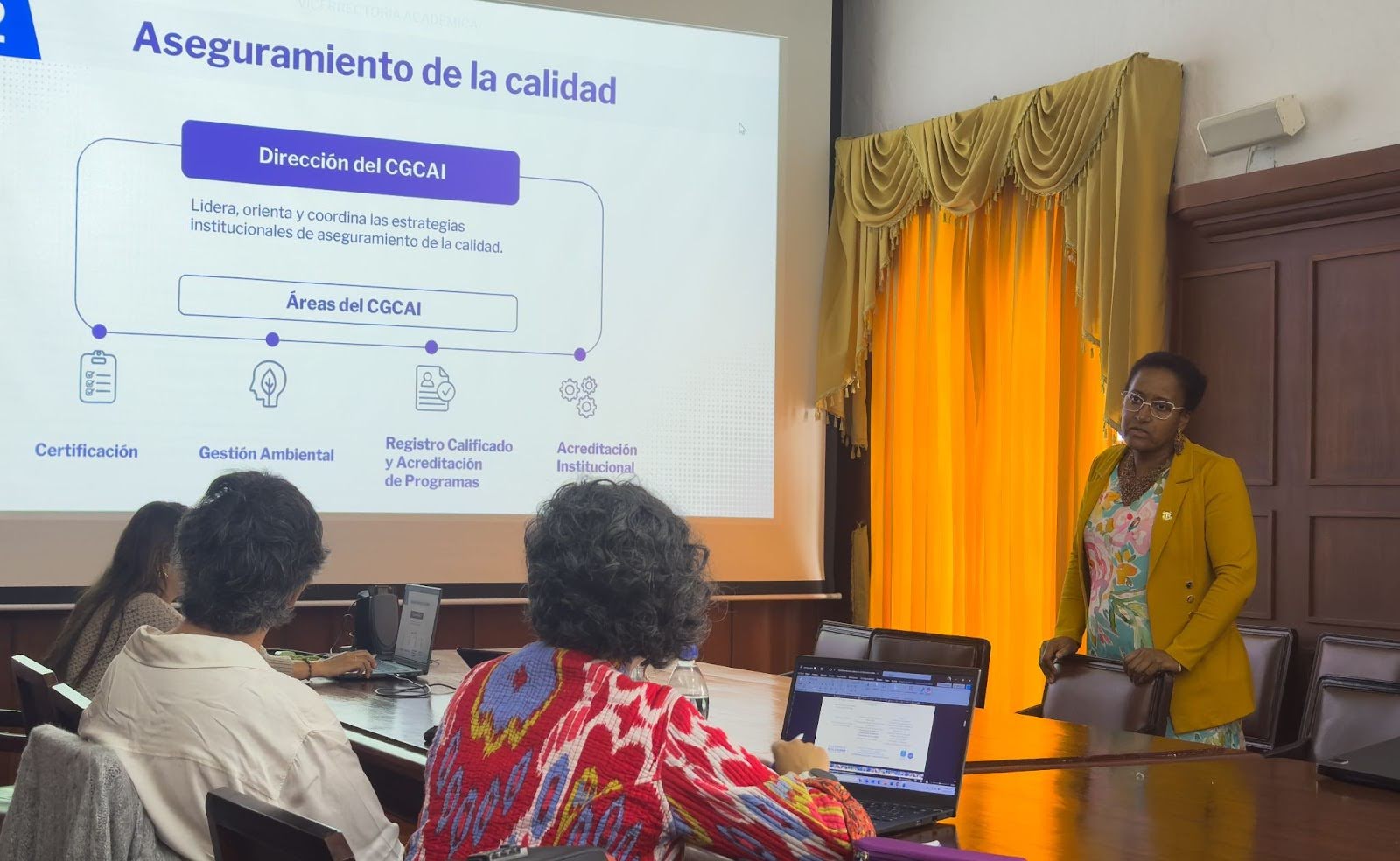
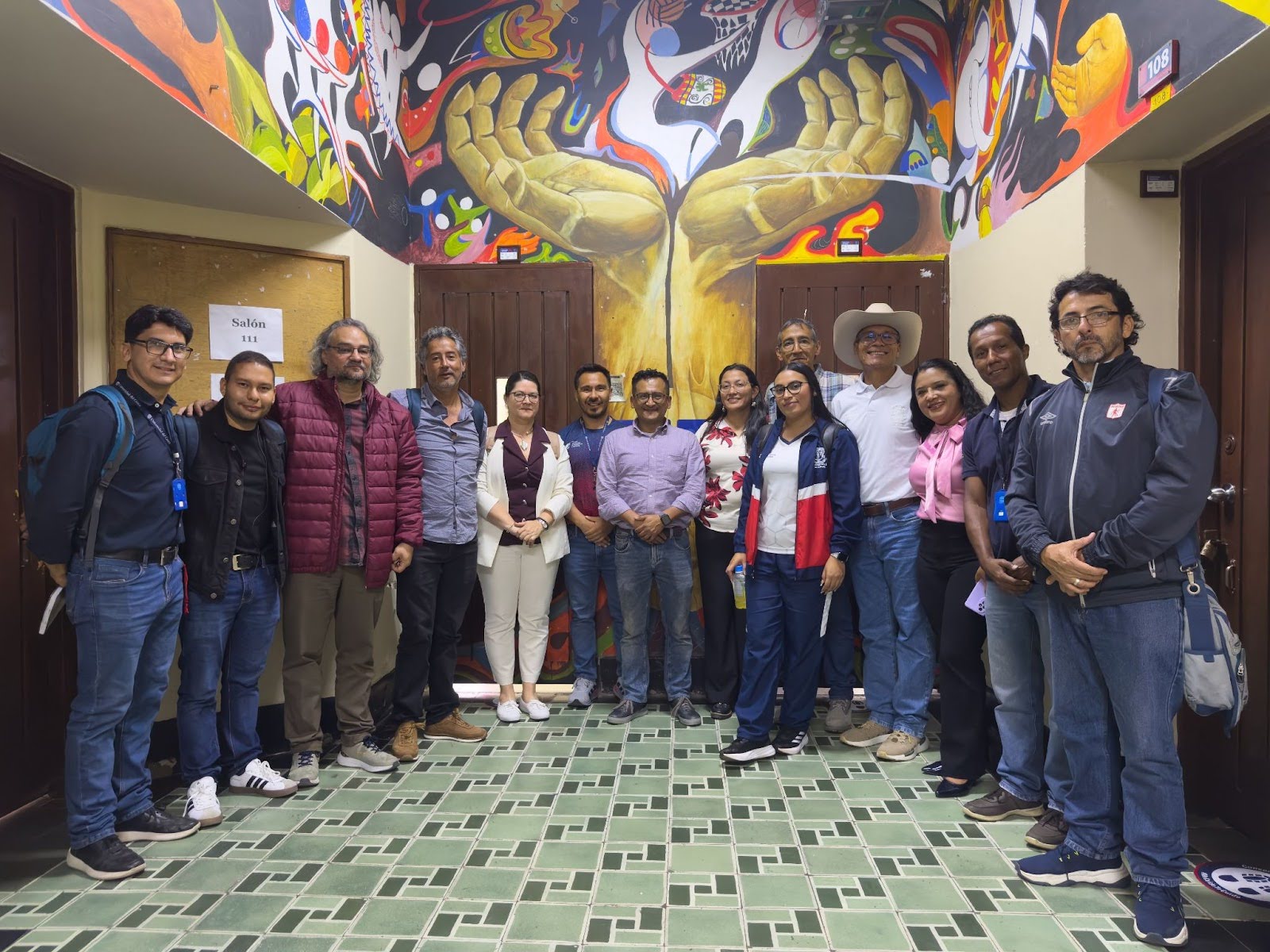
And if you’re wondering how the process works, here’s more! At each stage of this journey, academic peer review visits begin with an institutional presentation delivered by the Academic Vice-Rector’s Office and the corresponding faculty. This introduction is followed by the presentation of the results of each program’s self-evaluation process and its improvement plans. Subsequently, the evaluators hold meetings with students, professors, graduates, employers, and representatives from various units, including the Vice-Rector’s Office for Research, the Administrative Vice-Rector’s Office, the Vice-Rector’s Office of culture and Wellness, the Office of Interinstitutional and International Relations, and the Division of Bibliographic Resources and Media, among others.

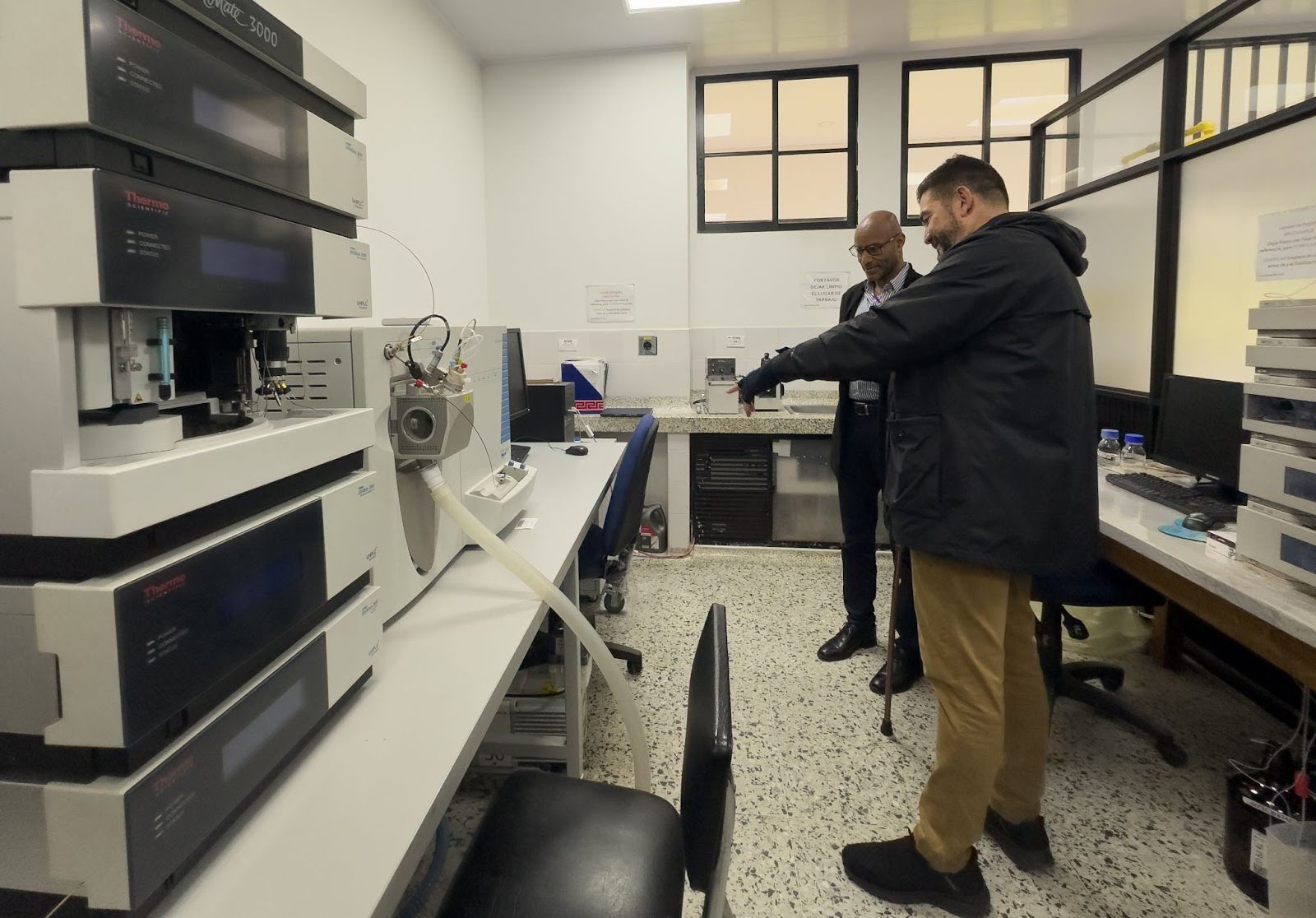
In addition, academic peers conduct tours of the faculties and student practice settings, enabling them to carry out a comprehensive assessment of the academic, research, administrative, and well-being conditions that support program quality. In the case of doctoral programs, evaluations include the participation of an international peer reviewer, while at the undergraduate and postgraduate levels, evaluators are national peers directly appointed by the National Accreditation Council of Colombia.

Imagen Visita de pares
Provided Photo.
Imagen Visita de pares
Provided Photo.

An academic process of institutional rigor

The high-quality accreditation process is voluntary and begins with a thorough internal evaluation conducted by each academic program. This self-evaluation, which lasts approximately eight months, makes it possible to identify strengths, areas for improvement, and levels of compliance with the quality factors established by the National Accreditation Council of Colombia. The outcome of this process is a report submitted to the Council, which subsequently appoints the academic peers responsible for the external evaluation. Between the submission of the report and the delivery of the peers’ assessment, a period of five to eight months may elapse.

The Center for Quality Management and Institutional Accreditation (CGCAI) is the institutional body responsible for providing continuous support to programs from the very beginning (when the self-evaluation process starts) through to the final stage of the visit. This support includes methodological guidance, assistance in data collection and analysis, preparation of agendas, coordination with the vice-rector’s offices and other units, as well as support during the development of the visits.


For the coordinator of this strategic unit, another of the notable aspects of this demanding process is the feedback received from external evaluators: “The peers’ comments have been very positive. Although they cannot commit to immediate accreditation, their assessments allow us to infer that the programs are carrying out serious work, with significant efforts to provide a high-quality educational service,” stated Dr. Alexander Buendía.

Without a doubt, the strengthening of a culture of self-evaluation and the active participation of academic programs reflect the commitment of the University of Cauca community to academic excellence. Although these processes require additional effort from academic communities, they also enable the projection of sustainable improvement actions aligned with the challenges of higher education.

Imagen Visita Pares
Provided Photo.
Imagen Visita de Pares
Provided Photo.

Regarding the next steps, the Center for Quality Management and Institutional Accreditation (CGCAI) continues preparing the University for future visits and moving forward steadily in the Institutional Reaccreditation process. In this regard, “Our immediate challenge is to complete, in a coordinated manner, the institutional self-evaluation report for accreditation purposes. We expect to submit the final document to the National Accreditation Council of Colombia in the first or second quarter of next year, as part of our commitment to continuous improvement,” stated the CGCAI coordinator.

In this way, each of these actions represents a new station on the collective journey toward Institutional Reaccreditation, a path that reaffirms that “together we make history” and that quality is a destination achieved only when the entire community moves along the same route.

Thus, each of these actions becomes a new stage in our shared journey toward Institutional Reaccreditation, because yes, this path reminds us that together we make history and that quality is a destination reached only when every member of our University moves in the same direction. We sincerely thank those who, through their constant and committed work, make this journey possible: students, professors, graduates, and staff. Their dedication and support are the driving force behind our pursuit of excellence.

Written by: Communications Management Center

Institution with High Quality Accreditation for 8 years, resolution MEN 6218 of 2019 - Vigilada MinEducación

  • Aumentar letra
  • Reducir letra
  • Aumentar Espaciado
  • Disminuir Espaciado
  • Escala de Grises
  • Contraste
  • Fuente Dislexia
  • Agrandar Cursor
  • Resaltar Enlaces
  • Restablecer
  • Centro de relevo

Universidad del Cauca

NIT. 891500319-2

Address: Calle 5 # 4 - 70 | Popayan, Colombia

Telephone: +57 (602) 820 9900

Toll-free: 018000 949020

Requests, Complaints, Claims, Suggestions and Congratulations
Email: ventasreclamos@unicauca.edu.co

Judicial notifications
Email:processes@unicauca.edu.co

Follow us on:

Institution with High Quality Accreditation for 8 years, resolution MEN 6218 of 2019 - Vigilada MinEducación