Higher education, one of the paths to take young people away from war and flouris...
Higher education, one of the paths to take young people away from war and flourish in Cauca
30 April, 2026
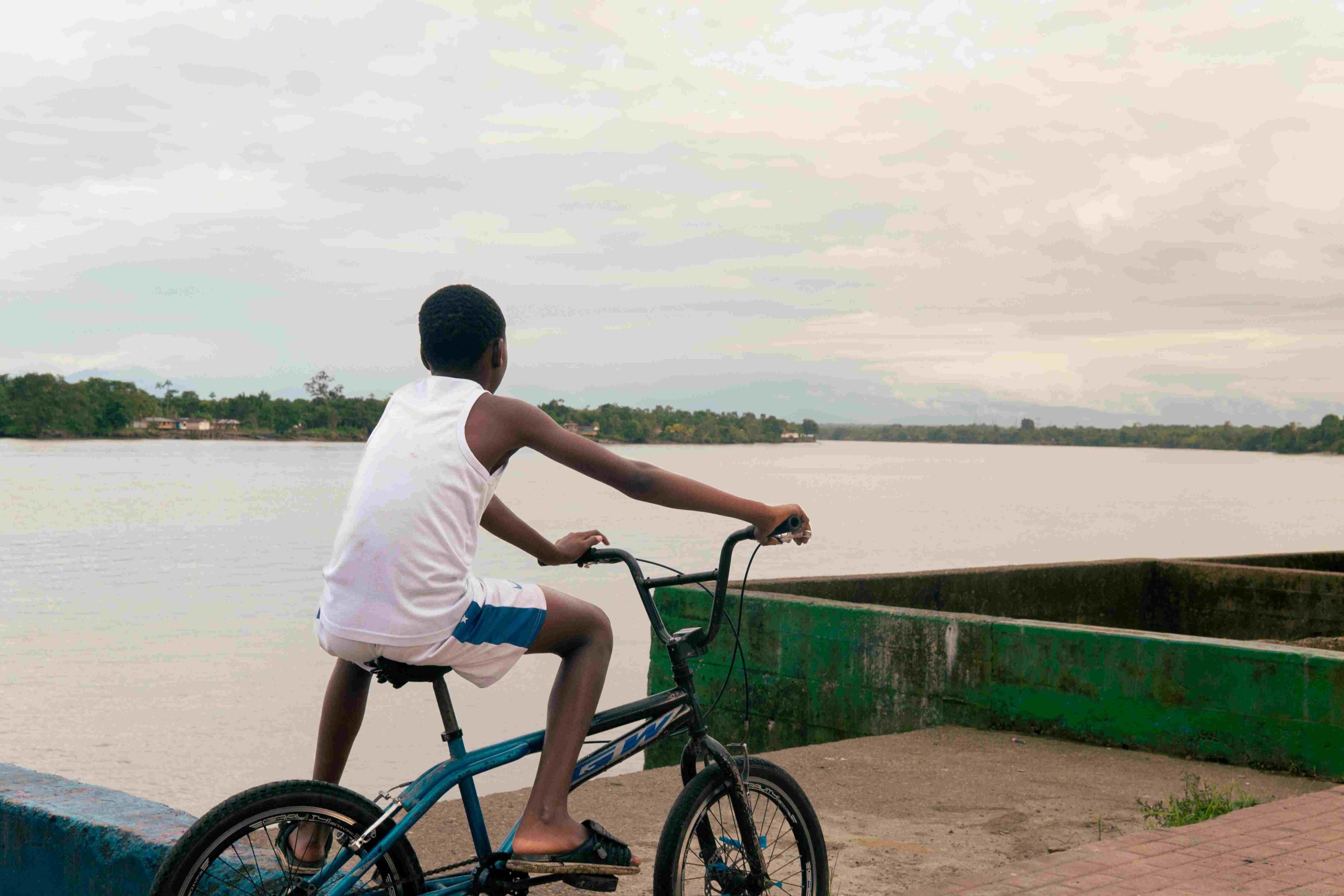
Each February 12, within the framework of the International Day of Red Hands, the world raises its voice to say “Stop!” to the forced recruitment of children and adolescents. In the department of Cauca, a territory historically affected by violence, this commemoration takes on an even deeper meaning. It is in this context that the University of Cauca reaffirms its commitment to life and peace, convinced that public, high-quality higher education is one of the most powerful tools to transform realities, protect youth, and build alternative futures in the territories.
“To take young people away from war” is the phrase that Rector Deibar René Hurtado Herrera reiterates at every opportunity to explain how the University of Cauca remains faithful to its historic mission of generating educational opportunities that dignify and transform the life projects of young people from Cauca. This purpose is aligned with the Institutional Development Plan “For a University of Excellence and Solidarity,” whose third strategic axis prioritizes the right to life, peace, reconciliation, and the inclusion of differences.
The urgency of this commitment is evident considering that, according to a report by the Ombudsman’s Office, between January and December 2025, 257 cases of recruitment of children and adolescents were recorded in the country, a figure that reflects the persistence of a reality that steals futures and deepens the wounds of conflict. In line with this vision, one of the major commitments of the current university administration, in coordination with the National Government, is to facilitate access to higher education for young people from remote and violence-affected municipalities. Initiatives such as the Immediate Transition to Higher Education Program (PTIES), the agreement with the Escuelas Normales Superiores, and special admission mechanisms demonstrate that the commitment is not merely rhetorical, but structural. A concrete example is the differential admission process at the Santander de Quilichao campus, where 70% of available places are allocated to young people from the 13 municipalities of northern Cauca, a region historically affected by armed conflict. And this is grounded in a powerful reason: because at the University of Cauca, we think, act, and educate for peace.
Photograph: Communications Management Center
Photograph: Communications Management Center
In the same vein, the Peace Commission, in partnership with the Coalition Against the Recruitment of Children and Youth into the Armed Conflict in Colombia (COALICO), which also promotes the Day of Red Hands, leads educational and communication actions aimed at preventing recruitment. Professor Jaidiver Ojeda explained that, through the FISH courses developed in Popayán and Santander de Quilichao, pedagogical strategies have been promoted to analyze risks associated with the armed conflict. These spaces address topics such as the identification of actors, risk mapping, and the role of social media, now one of the main recruitment channels: “We have made progress in raising awareness among students, providing them with a broader understanding of the risks faced by the region and the university community,” he emphasized, also noting that these processes have opened regional dialogues and projected the continuity of the initiative.
For her part, Professor Diana Patricia Pito highlighted that this strategy is supported by the Swedish Church and that, during the previous semester, the workshops focused on life skills, recognition of rights, and tools to respond to potential risk situations. As a result, students produced communication pieces that critically reflect on the prevention of recruitment and the defense of the rights of children and youth: “The goal is for students to become multipliers in their territories,” she stated, explaining that this pilot, initially implemented at the University of Cauca, could be expanded to other institutions in the country. She also emphasized the coordinated efforts to uphold school environments as protective territories in the face of conflict.
From COALICO, there was also a warning about the growing sophistication of recruitment strategies, especially in digital environments where, through attractive content, false promises of money, recognition, or protection are offered. The organization noted that, in addition to these new dynamics, other forms of recruitment persist and serious violations against children and adolescents have increased within the context of the armed conflict. In light of this situation, the Coalition reiterated the urgency of strengthening prevention, protection, and comprehensive care actions, as well as demanding that the cessation of recruitment be a non-negotiable point in any negotiation scenario. In the words of Oscar Fernando Cobo, project coordinator of COALICO, it is essential to “Remember that the hands of children and adolescents are not for war, but for life, play, education, and the construction of peace.”
In the current context of Cauca, the University of Cauca reaffirms its commitment to expanding access to higher education as a concrete action to protect and build peace. Every place that opens, every young person who enters the classroom, every presence of the University in the territory, and every educational process that strengthens critical awareness represents lives moving away from violence and toward a dignified future. As a public institution committed to its community, the University of Cauca, #HeritageOfAll, continues fulfilling its historic responsibility to educate generations that will transform Cauca through knowledge, excellence, solidarity, and hope, convinced that peace is built day by day through education.
Thus, the true power lies in our hands: the power to choose peace. For more young people in classrooms and fewer in war. We dream that their hands cross our doors and not the paths of war… because every student at our University is a victory for peace!