The University of Cauca strengthens community risk management in the Quilichao Ri...
The University of Cauca strengthens community risk management in the Quilichao River Basin
16 April, 2026
The Research Group in Natural Hazards, Risk, and Territory (ANTE-ICSQ), attached to the GCISA–TSEJK Research Group of the University of Cauca, carried out a community work session in the Guayabal village, in the municipality of Santander de Quilichao, with the purpose of strengthening local capacities in the monitoring of hydrometeorological events and disaster risk management.
The Quilichao River basin, recognized for its water and environmental richness, originates in the Munchique hill, near the Munchique Los Tigres natural reserve, and is inhabited by peasant and Indigenous communities that depend closely on their natural surroundings. Due to its geoenvironmental characteristics, the upper part of the basin is susceptible to mass movements and erosive processes, which at times trigger flood events and flash floods that affect both the inhabitants of the upper zone and those living in the urban area of Santander de Quilichao, in the lower part of the basin.
In response to this situation, the ANTE-ICSQ Research Group has been promoting actions that encourage the social appropriation of knowledge and the active participation of the community in risk management, within the framework of the research project titled “Socio-natural hazard scenarios in the micro-basins of the Quilichao and Mondomo rivers, Santander de Quilichao – Cauca: Contribution to risk management and territorial planning processes,” registered with the Vice-Rectory Office for Research.
Provided Photo
Provided Photo
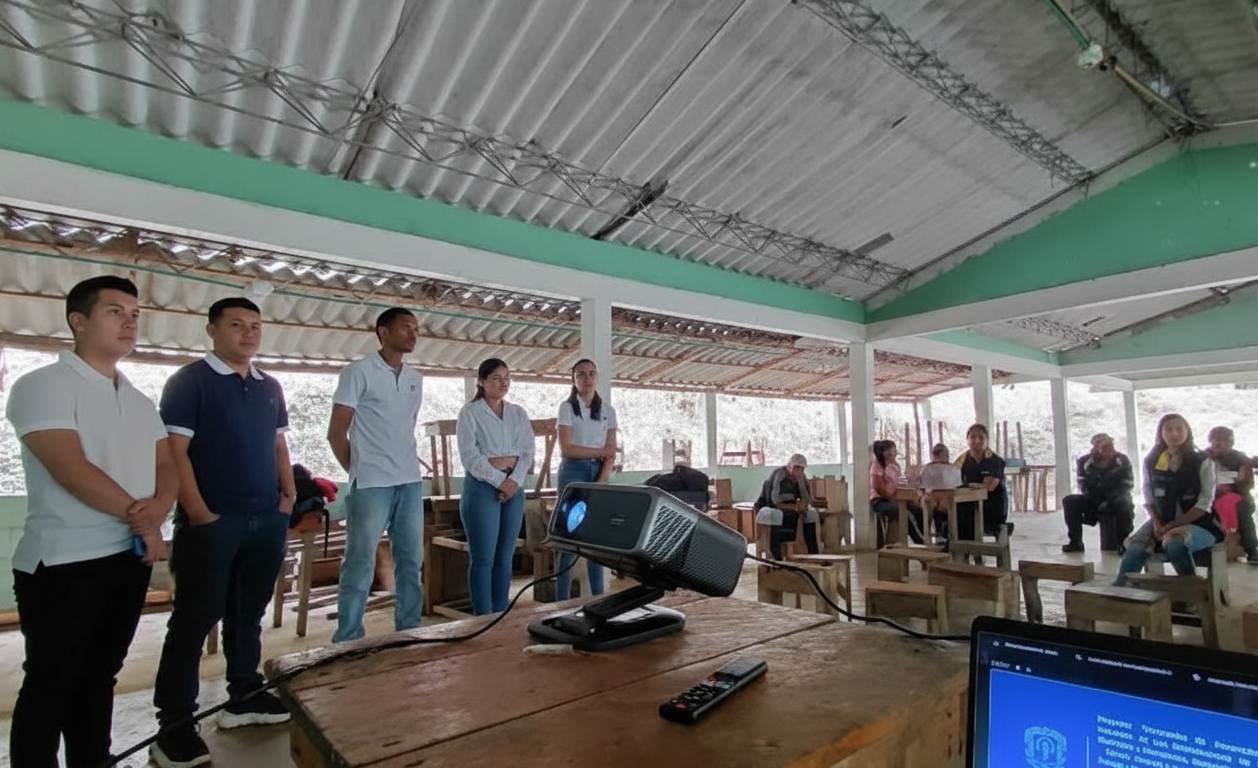
As part of the activities scheduled within the project, in the month of September the workshop titled “Instruments for the Measurement of Hydrological Parameters and Community Monitoring” was held, a space that allowed for the sharing of knowledge on the importance of monitoring climatic conditions and their relationship with disaster risk management.
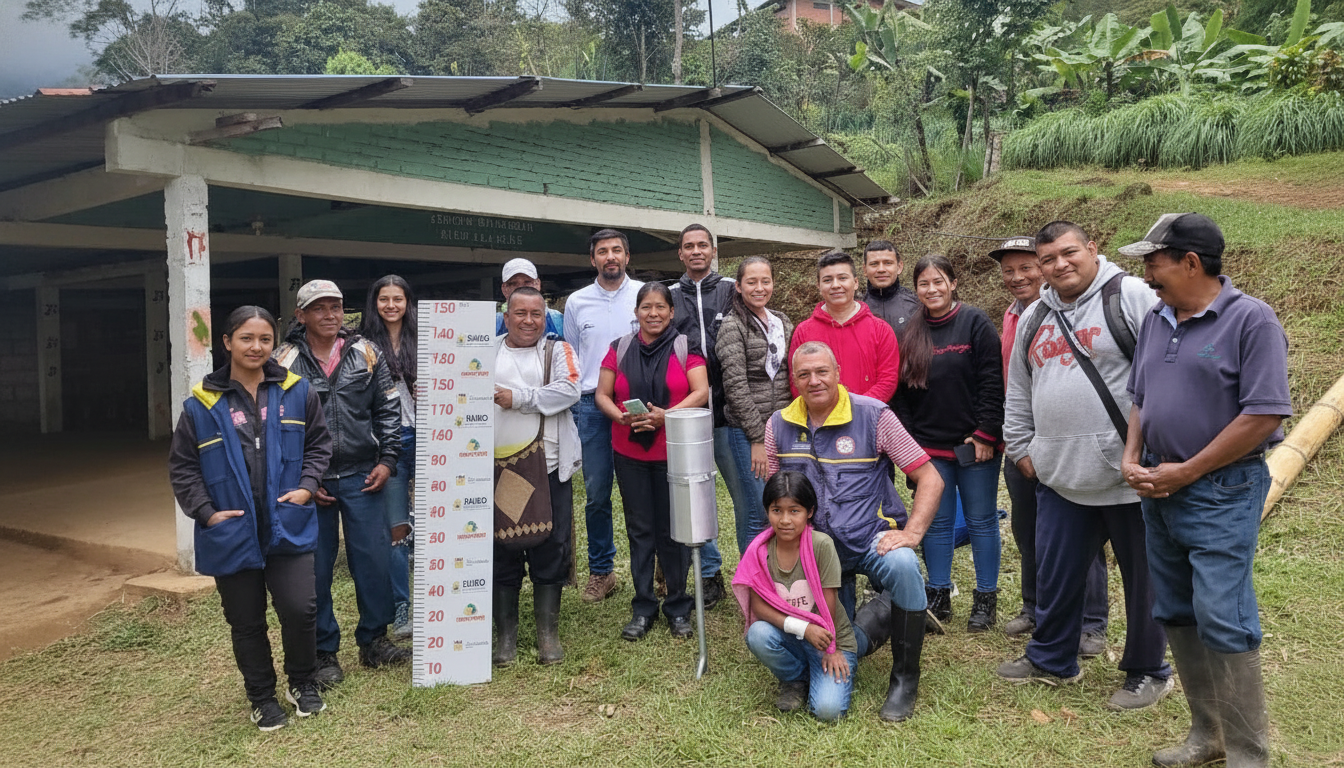
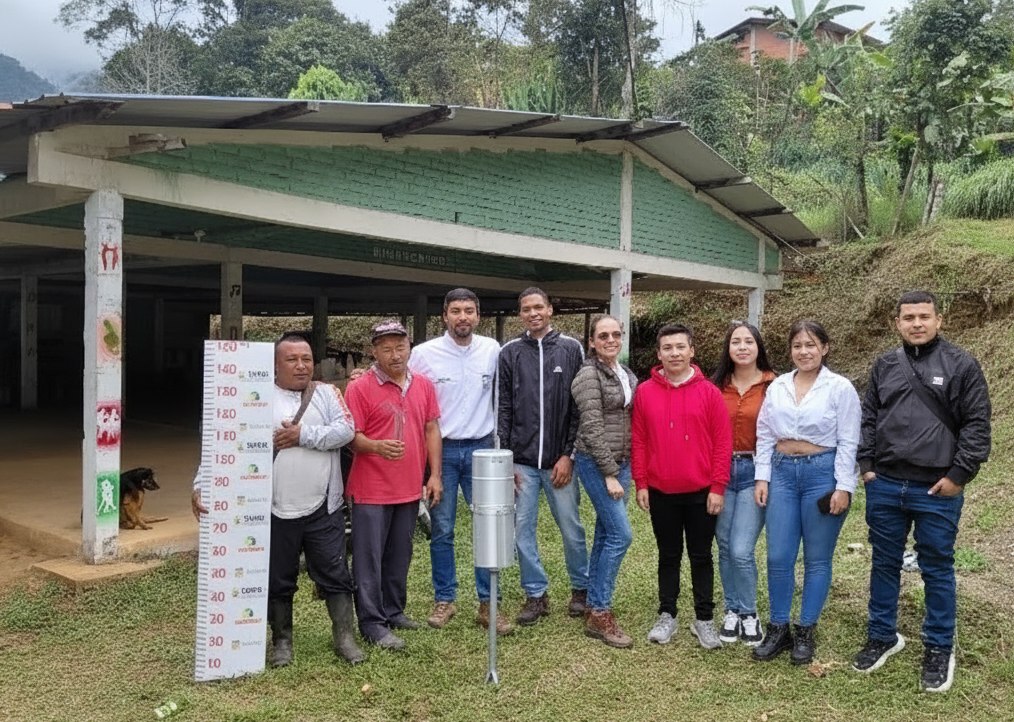
During the session, a Hellmann-type rain gauge was delivered to the community of the Guayabal village, an instrument standardized by the World Meteorological Organization (WMO) for precipitation measurement, which will be operated under the leadership of risk management guardians. This initiative contributes to strengthening local capacities for territorial management and promotes the exchange of technical and community knowledge.
Throughout the workshop, guidance was provided on the types of equipment and the requirements for their proper installation, as well as on the collection of precipitation and level data using a staff gauge.
The activity included the participation of the Community Action Board of the village, the Rural Aqueduct Board, the risk guardians from the villages of Páez, Guayabal, and Canoas, emergency response organizations, professionals from the Municipal Office for Risk Management, and members of the research group, who shared a space for dialogue and collective learning, reaffirming that risk management cannot be understood solely from a technical perspective, but requires the commitment and active participation of those who inhabit the territories.
This articulation between the University and the community made it possible to strengthen institutional ties and recognize the value of local knowledge as an essential tool for risk management. The activity yielded a positive outcome, consolidating an important step in the community support process in the Quilichao River basin.
Through initiatives like this, the University of Cauca reaffirms its commitment to being a supportive institution engaged with its environment, in line with the third strategic axis of the Institutional Development Plan, by promoting the training of professionals and communities capable of understanding their context, generating collective solutions, and contributing to the construction of safer, more resilient, and sustainable territories.