By Javier Orlando Muñoz Bastidas, Professor in the Department of Philosophy
The South Korean philosopher Han raises a very important point: “Inactivity is not contrary to activity. Activity is nourished, rather, by inactivity” (2023; 16). This statement is made in the context of today’s performance-driven society, which promotes and dictates constant activity, entrepreneurship, and innovation as ideals of life. Being busy is, in the contemporary world, a mark of distinction, to the extent that not being busy generates a deep sense of guilt. Presenting a “praise of inactivity” might sound offensive to hyper-busy individuals. But what the philosopher asserts is that inactivity is not opposed to activity; instead, it nourishes, empowers, and elevates it. True activity is founded on a profound state of inner stillness.
What must be done, then, is to differentiate between two types of activity: activity of performance and activity of potency. The first is opposed to inactivity; the second is nourished by inactivity. Activity of performance drives individuals to overexert themselves to meet the standards of beauty, happiness, and success imposed by the prevailing economic system. This results in profound physical and mental exhaustion, culminating in anxiety and depression. Why? Because when those standards cannot be met, a feeling of self-blame for one’s own impotence arises. Therefore, activity of potency involves halting the pace of everything established and beginning to design a new process at unexpected rhythms.
The fundamental point does not lie in the affirmation of activity of potency itself, but in the fact that it is sustained by inactivity. Let us put it clearly: learning to do nothing is what makes authentic creative activity possible.
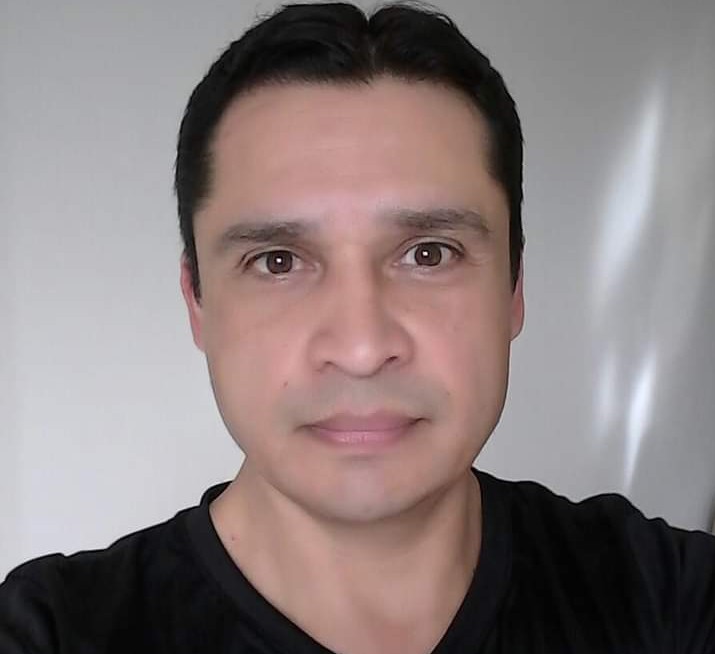
Provided Photo.
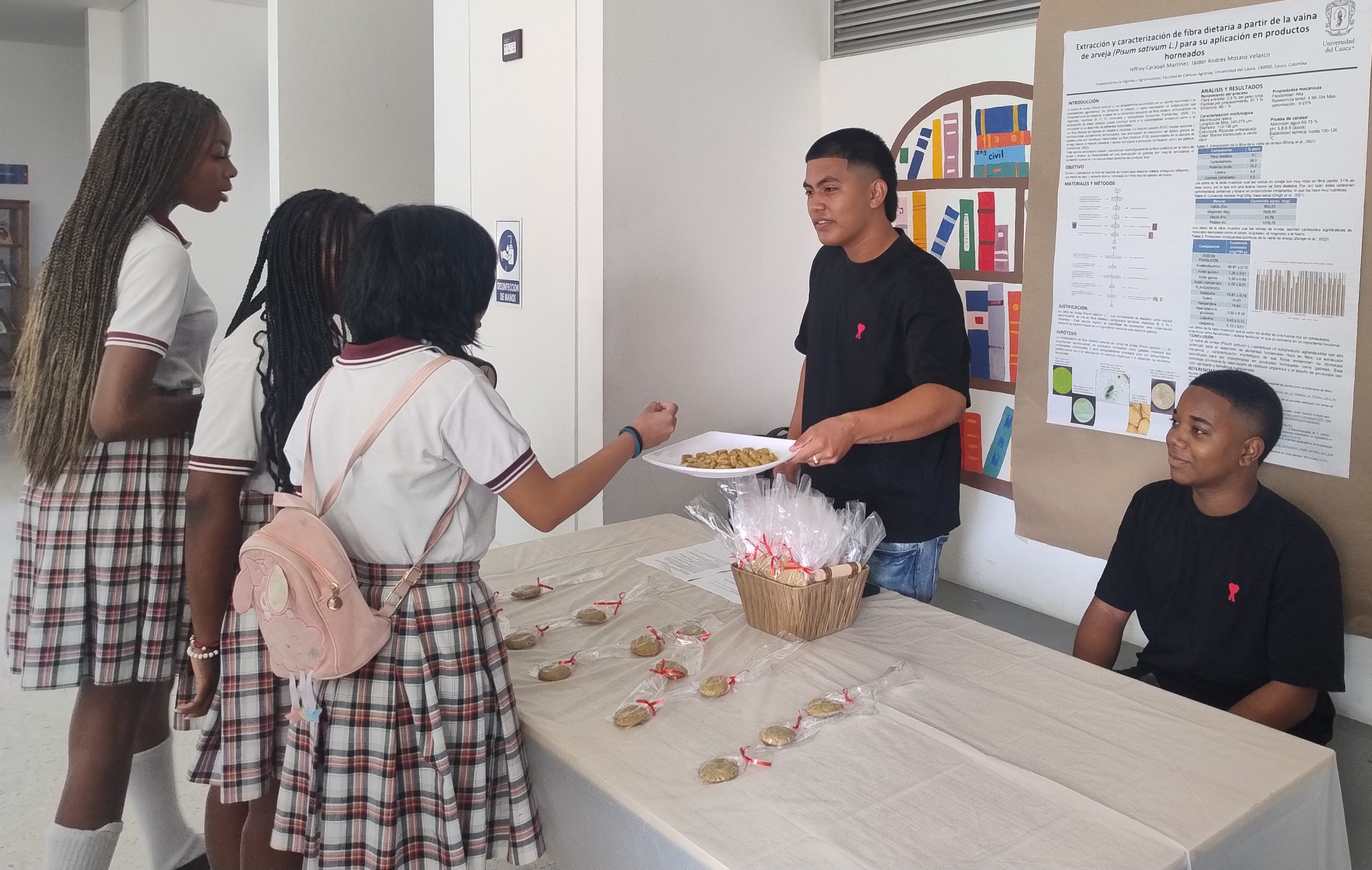
Provided Photo.
Within inactivity lies a creative principle, because it leads us into a “zone of indeterminacy that enables us to produce something that has never existed before” (2023; 16). Inactivity is, in reality, a state of profound intensity in which one accesses the emergence of the new. For the new to be possible, a little renewing chaos is necessary. Inactivity allows for a comprehensive transformation of everything established.
But the most important aspect of inactivity is its healing capacity. First, it must be said that excessive, self-imposed performance necessitates a constant anesthesia of the individual. There are two forms of anesthesia: one that eliminates pain and one that eliminates stimulation. The first prevents the feeling of guilt in the face of failure as a global system of domination; the second consists of overcoming physical and mental exhaustion through the constant stimulation generated by “positivity.” Individuals anesthetize themselves with drugs, painkillers, and stimulants, but also with positive or “self-improvement” discourses (so called, even if they are not actually overcoming anything). This is what inactivity is meant to heal.
What is “primordial healing”? Han presents it as follows: “When the little sister sees that her little brother feels pain, she finds a path beyond all knowledge, caressing, wanting to touch him where it hurts. In this way, the little Samaritan becomes the first doctor. Within her operates unconsciously a knowledge of a primordial efficacy that directs her impulse toward the hand and guides the hand toward effective contact. Because this is what the little brother experiences: the hand does him good. Between him and the pain stands the sensation of ‘being touched’ by the little sister’s hand, and the pain retreats before this new sensation” (2021; 47). Inactivity consists in going toward the other in order to create an affective and existential bond. In haste, speed, and busyness, this encounter is not possible. When the other stops to nurture, and when we stop to nurture the other, authentic healing begins.
Inactivity breaks with the economic logic of production. It is not about producing, but about creating. The one who does nothing is hostile to production, because they annul life as mere survival and affirm it as contemplative life, that is: a life in which the fundamental unity of all that exists is understood. The meaning of life cannot be production and consumption. The meaning of life consists in contemplating with awe the infinite expression of existence, from which the creation of the self may become possible. Life must be the exaltation of existence as a celebration: “The celebration is the expression of an overflowing life, of an intense form of life. In the celebration, life turns back upon itself, instead of pursuing goals external to it. The celebration nullifies action” (2023; 61). A higher life is not possible through performance, but through the excess of celebration. One must stop in order to create and to be able to smile.
But inactivity also implies a “fundamental rage” (2017), which consists of learning to say: No more! Individuals are not even objects, because in the contemporary world they are beneath technological objects. It cannot be possible that the capacity for self-creation is nullified in a kind of digital autism, in which everyone is trapped in their own insignificant world. Fundamental rage consists in destroying everything so that everything can be possible again. There are unimagined superior intensities that can be brought into being.
References
Han, B. (2017). The Burnout Society. Herder Publishing.
Han, B. (2021). The Palliative Society. Herder Publishing.
Han, B. (2023). Contemplative Life. Taurus Publishing.
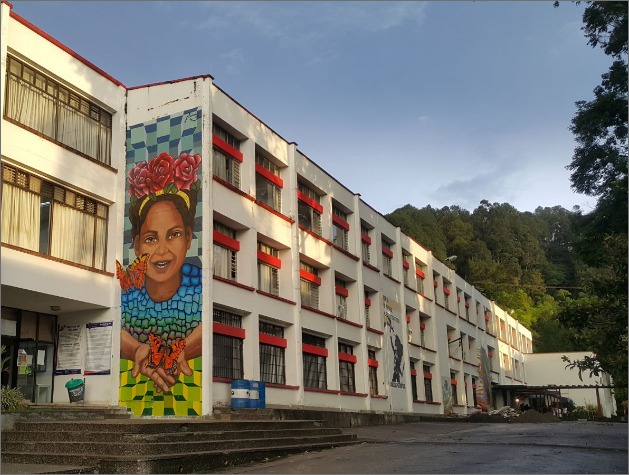
Provided Photo.
Writing: Javier Orlando Muñoz Bastidas
Professor, Department of Philosophy