Innovation that transforms lives: Universidad del Cauca patents bioadsorbent to p...
Innovation that transforms lives: Universidad del Cauca patents bioadsorbent to purify water
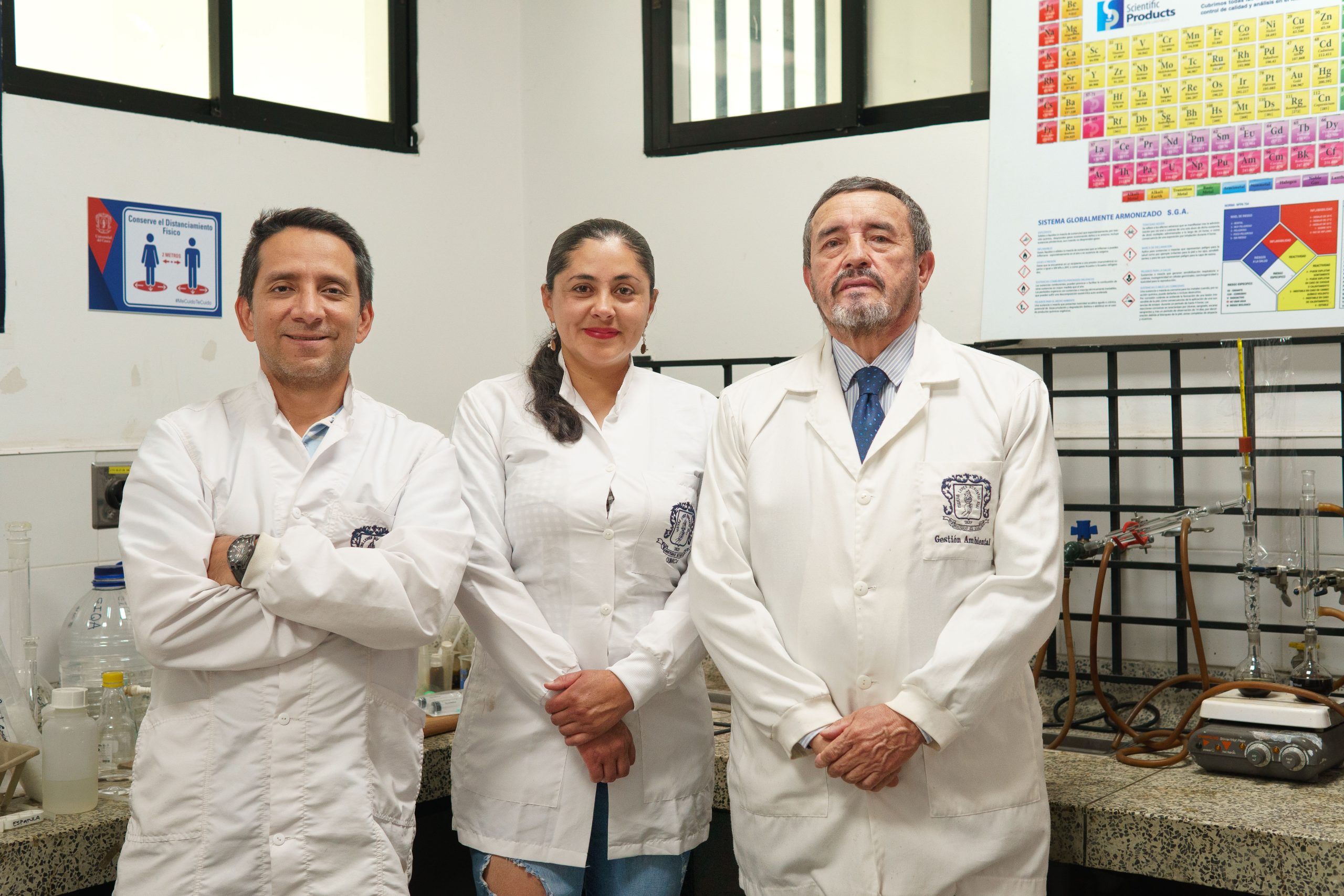
The great commitment and hard work of José Antonio Gallo Corredor, Rodrigo Andrés Sarria Villa, and Norma Katherine Alegría Córdoba, members of the Environmental Analytical Chemistry Research Group, paid off: the Alma Mater of Cauca obtained a new patent resulting from an innovative bioadsorbent, with strong potential for water decontamination, developed from forest residues from the department of Cauca.
From this regional center of thought, which has committed itself to promoting “Research for Excellence” as part of the second strategic axis of its Institutional Development Plan, “For a University of Excellence and Solidarity,” it is an honor to announce the registration of a new patent. Beyond being news that fills us with pride for strengthening our knowledge generation, it also contributes in a special way to the consolidation of a University committed to its environment. This achievement not only demonstrates academic excellence in research, but also has a direct impact on improving the quality of life of communities that, unfortunately, still lack access to safe drinking water.
This new patent was obtained thanks to the work of the Environmental Analytical Chemistry Research Group, who developed an innovative bio-adsorbent made from forest residues from Cauca, an adsorbent capable of retaining heavy metals in aqueous environments. Impressive, right? This material, notable for being sustainable and low-cost, has applications in water purification for industries, aqueducts, households, and communities with limited access to safe drinking water. It contributes significantly to resource reuse and environmental protection, and thus marks the first patent granted to the Department of Chemistry of the Faculty of Natural, Exact, and Educational Sciences at the University of Cauca.
Provided Photo.
Provided Photo.
In this regard, researcher Rodrigo Sarria Villa enthusiastically highlighted the connection between his scientific work and the needs of the local environment: “We draw our inspiration especially from our territory and our people, seeking solutions through Chemistry to the different problems that affect our region.” He went on to emphasize the importance of teamwork, noting that “We rely greatly on our students, who motivate us to develop projects that generate a significant impact in the region.”
For his part, researcher José Antonio Gallo explained the purpose of this invention: “The idea is to make widespread use of the resin that was created, applying it to retain this type of heavy metals, both in drinking water and in wastewater,” clearly expressing the environmental and social motivations that guided this remarkable effort.
Finally, researcher Norma Katherine shared her joy and satisfaction with the results achieved: “I feel a great personal fulfillment in seeing that the many years of work one dedicates to the laboratory, working behind closed doors, have borne fruit, because it is a significant initiative that can have an impact at the social level, that can improve the quality of life of people and of the ecosystem in general, contributing to environmental well-being by adding that small grain of sand with a strong sense of social responsibility.”
Regarding researcher Norma Katherine, it is important to note that she is a graduate of the Chemistry program of our Alma Mater, holds a master’s degree in Education from the Universidad del Valle, is currently pursuing a PhD in Educational Sciences at our institution, and presently serves as a teacher at the Agropecuaria del Pueblo Totoró Educational Institution in the municipality of Totoró.
Thus, the bioadsorbent developed by the Environmental Analytical Chemistry Research Group is, without a doubt, a significant advancement in the fight against water pollution. This material, produced from local forestry residues and chemically modified, acts as a natural filter that not only purifies water, but also reduces environmental impact by reusing renewable resources and minimizing production costs. Its potential applications include the decontamination of industrial wastewater, filtration in aqueducts and productive systems, the development of household filters for communities with limited access to treated water, and urban and rural systems that enable the sustainable reuse of water.
The approval of this patent registration, managed by the Division of Innovation, Entrepreneurship, and Engagement with the Environment (DAE) and the Research System of the Vice-Rectory for Research at our University, represents a milestone in the transfer of technology to the market and to society, strengthening the institution’s commitment to research excellence. This achievement, based on the utilization of residues rich in polyphenolic compounds, not only reflects the scientific capacity of the Universidad del Cauca, but also its impact in creating sustainable solutions to global challenges. As an institution, we take great pride in contributing to the care of the planet, promoting the use of renewable materials, and training new generations of scientists committed to the well-being of humanity and the environment. We extend our most sincere congratulations to the researchers who made this bioadsorbent possible, for through it, many lives will be transformed. How proud we are!