Encuentra lo que necesitas en segundos. Explora, descubre y obtén respuestas rápidas. ¡Comienza tu búsqueda ahora!
The Unicauca Biotransforma event, held at the Santander de Quilichao campus of the Cauca Alma Mater, was the result of work led by Professor Margarita Salazar and Professor José Fernando Solanilla Duque, who through integrative classroom projects and a pedagogical approach encouraged first-semester students from the Agroindustrial Engineering program to explore sustainable solutions through the use of agroindustrial waste.
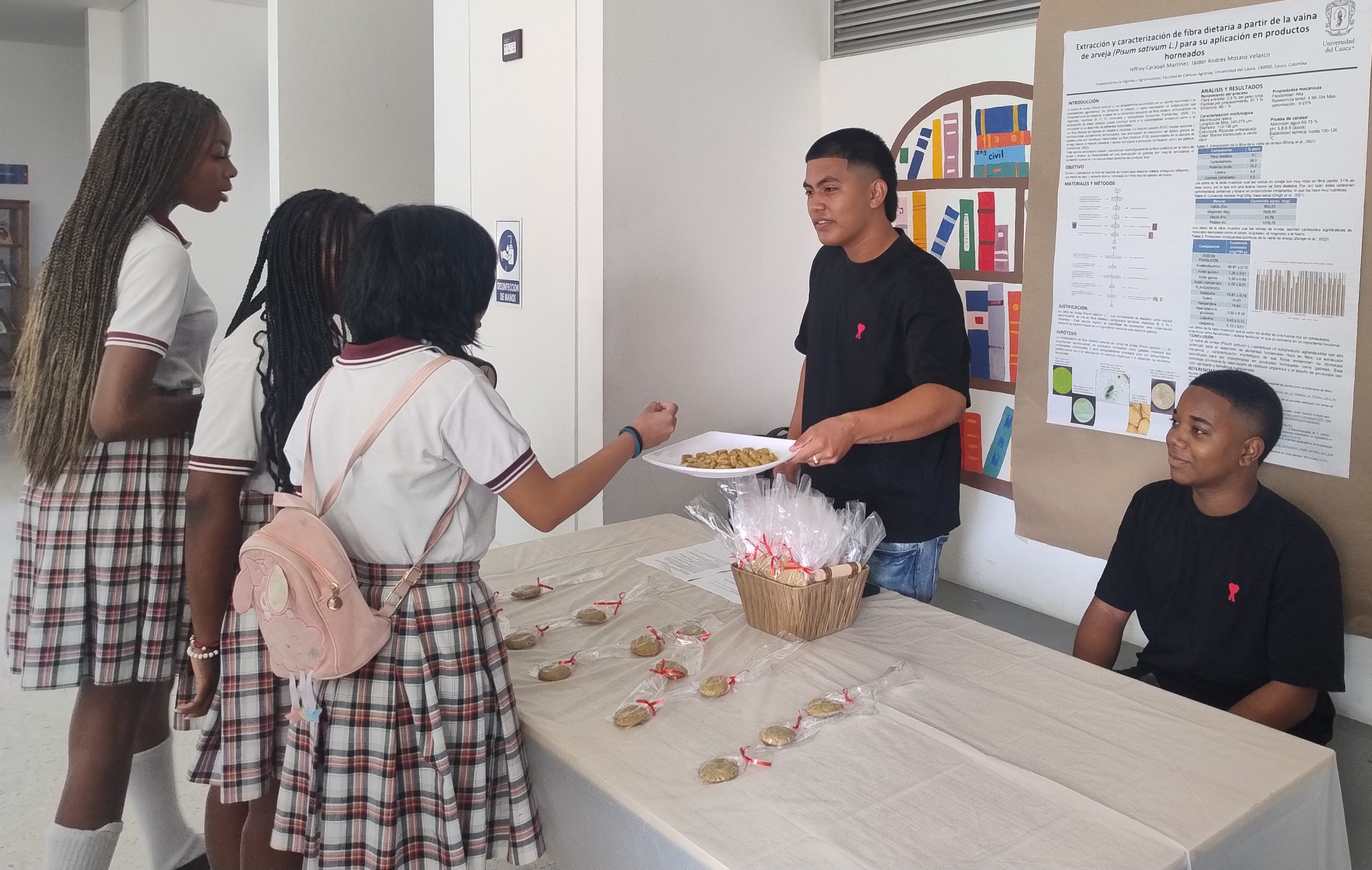
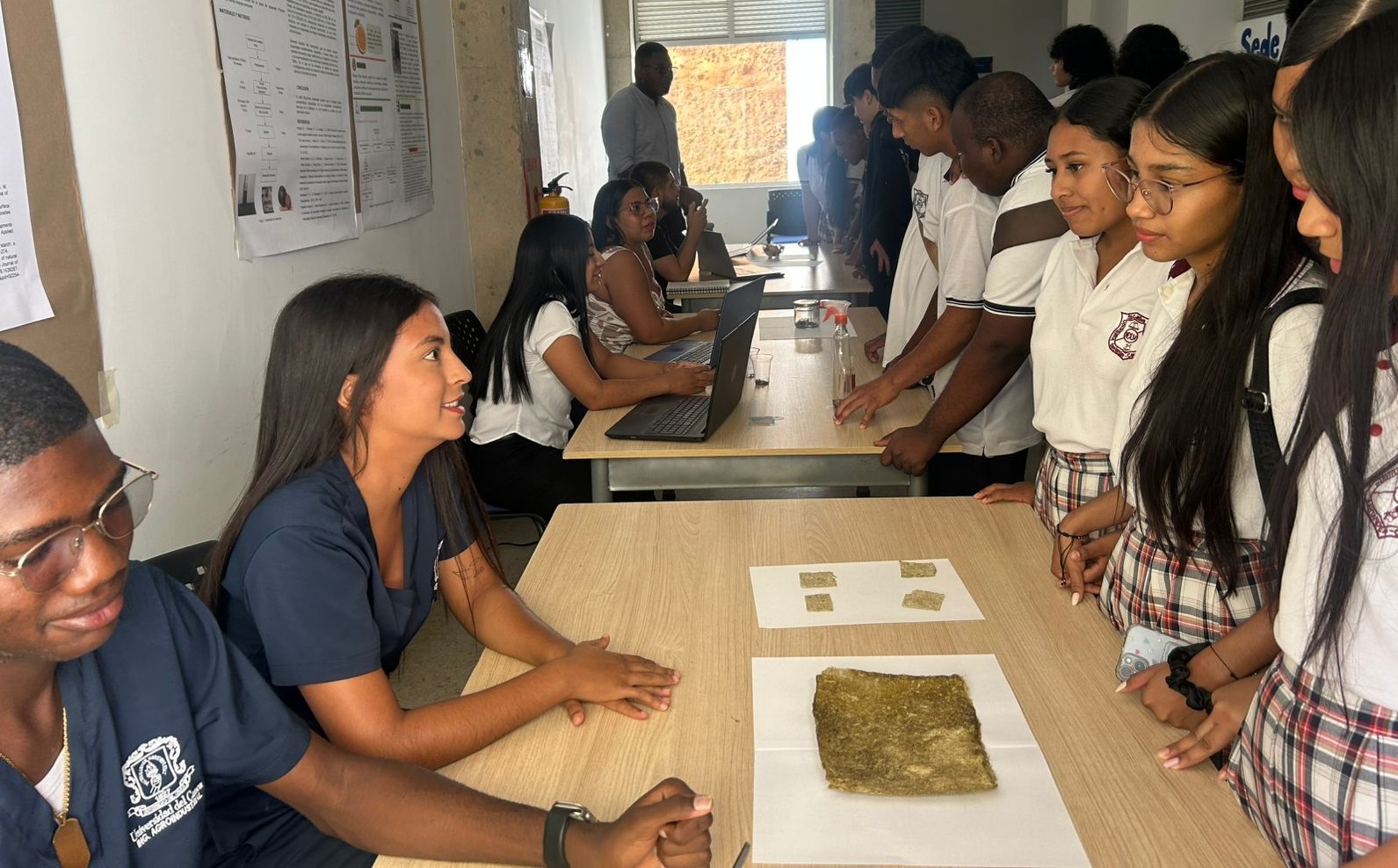
Thus, during the event that took place on June 4, 2025, the results of the integrative classroom projects developed in the Biology and Processes 4 courses were presented, focusing on the use of agroindustrial waste for the creation of sustainable products such as organic fertilizers and biodegradable materials. High school students and a broader audience also joined the activity, people interested in the results of these valuable exercises, thereby strengthening the ties between academia and the community: a clear example of how the social appropriation of knowledge can be promoted.
The event not only demonstrated the potential of future agroindustrial engineers in generating sustainable solutions, but also reaffirmed Unicauca’s commitment to comprehensive education and social responsibility, since by integrating theory with practice and encouraging dialogue with diverse social actors, educational processes are consolidated that go beyond the classroom and contribute to sustainable regional development.
“Unicauca Biotransforma was not only an exhibition, but also a space for motivation and inspiration. It was a space where knowledge intersected with the needs of the countryside, industry, and society. It is, without a doubt, a determined commitment to an agroindustry with identity, innovation, and deep respect for the territory, to ‘do by knowing,’” stated enthusiastically Jorge Luis Sánchez Ortega, Coordinator of the Agroindustrial Engineering Program.
It is worth highlighting that, within the framework of the integrative and classroom projects of the Biology course, the students have developed meaningful experiences with a clear objective: to apply scientific knowledge to real contexts through the use of agroindustrial residues, by means of the extraction and characterization of plant fibers! This challenge has not only allowed them to understand biological and cellular principles, but also to connect them with the solution of environmental problems and the development of value-added products, while they advance through their undergraduate training process.
It is, literally, a transformative endeavor , why? Because in these experiences, residues such as pineapple, orange, and soursop peels, snake plant leaves, chontaduro peel and rachis, sugarcane bagasse, eggshells, among others, have been used as raw material to obtain fibers with potential for use in food applications (such as encapsulates or edible structures) and non-food applications (biomaterials, packaging, filters, etc.).
In this regard, Margarita Salazar, professor in the Industrial Engineering program and leader of the event, stated: “It is an immense pride to witness how our students apply the knowledge acquired in the classroom to develop innovative solutions that positively impact their environment. During the Unicauca Biotransforma event, it was gratifying to observe the interaction between students and the community, presenting projects that transform agroindustrial residues into food products and sustainable materials,” adding that the projects not only demonstrate a solid understanding of biological and process principles, but also a commitment to the green economy and pollution reduction, aligning with the Sustainable Development Goals.
There is no doubt that at Unicauca, we have talent! Within the framework of World Environment Day, commemorated every June 5, from our academic home we recognize and celebrate these kinds of initiatives, which strengthen the academic formation of students while contributing to the social appropriation of knowledge around key issues for sustainability.
Address: Calle 5 # 4 - 70 | Popayan, Colombia
Opening hours:
Monday to Thursday from 8:00 a.m. to 5:00 p.m. - Friday from 8:00 a.m. to 4:00 p.m.
Telephone: +57 (602) 820 9900
Toll-free: 018000 949020
Court notifications
Institution with High Quality Accreditation for 8 years, resolution MEN 6218 of 2019 - Vigilada MinEducación
NIT. 891500319-2
Address: Calle 5 # 4 - 70 | Popayan, Colombia
Telephone: +57 (602) 820 9900
Toll-free: 018000 949020
Requests, Complaints, Claims, Suggestions and Congratulations
Email: ventasreclamos@unicauca.edu.co
Judicial notifications
Email:processes@unicauca.edu.co
Institution with High Quality Accreditation for 8 years, resolution MEN 6218 of 2019 - Vigilada MinEducación