From theory to practice! This is how training processes for future economists and...
From theory to practice! This is how training processes for future economists and environmental engineers from Unicauca are shaped
Led by Professor Raúl Cortés, students from the Economics and Environmental Engineering programs at the University of Cauca implemented two pedagogical models in the municipality of Cajibío, Cauca, with the aim of applying their academic learning and contributing to community development.
One of the priorities of the University of Cauca has always been to bring the theory learned in classrooms into the everyday practices of the students’ departments of origin. This has been very clear to Professor Raúl Hernando Cortés Landázuri, who teaches in the Economics and Environmental Engineering programs.
Thus, since 2004, he has been implementing two pedagogical models entitled Research in the Classroom and Collaborative Learning. The main objective of these models is for students from the two aforementioned programs to establish communication and interact with communities, becoming familiar with their views and perceptions regarding development-related issues. Additionally, the models seek to encourage participants to relate to one another, engage in dialogue, share knowledge, and develop research projects that contribute to the populations with whom they work and that, in turn, allow them to participate in national and international events.
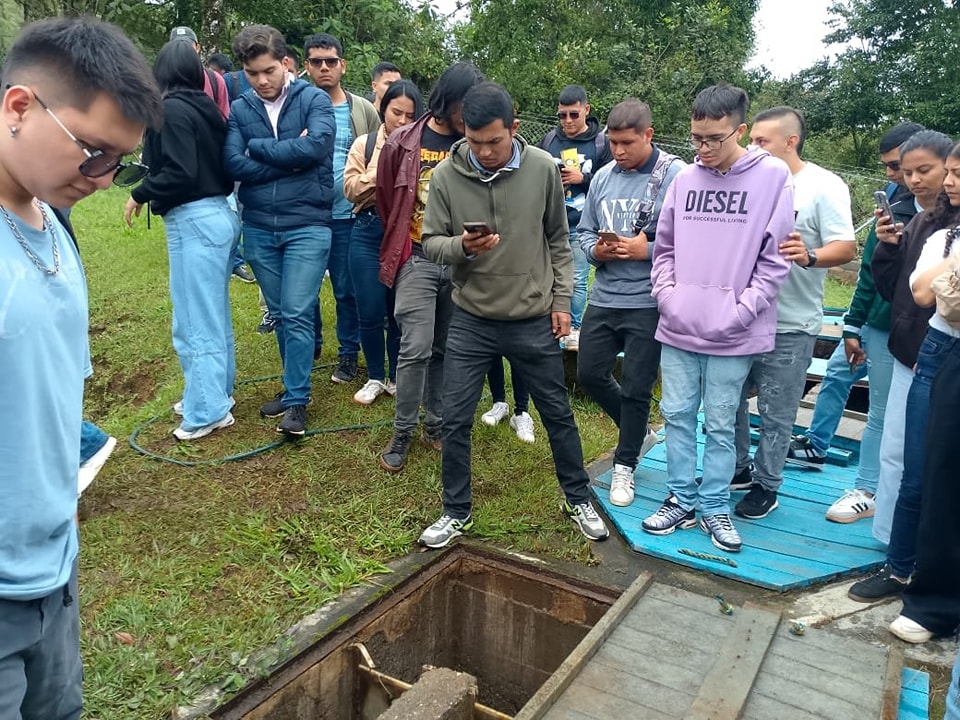
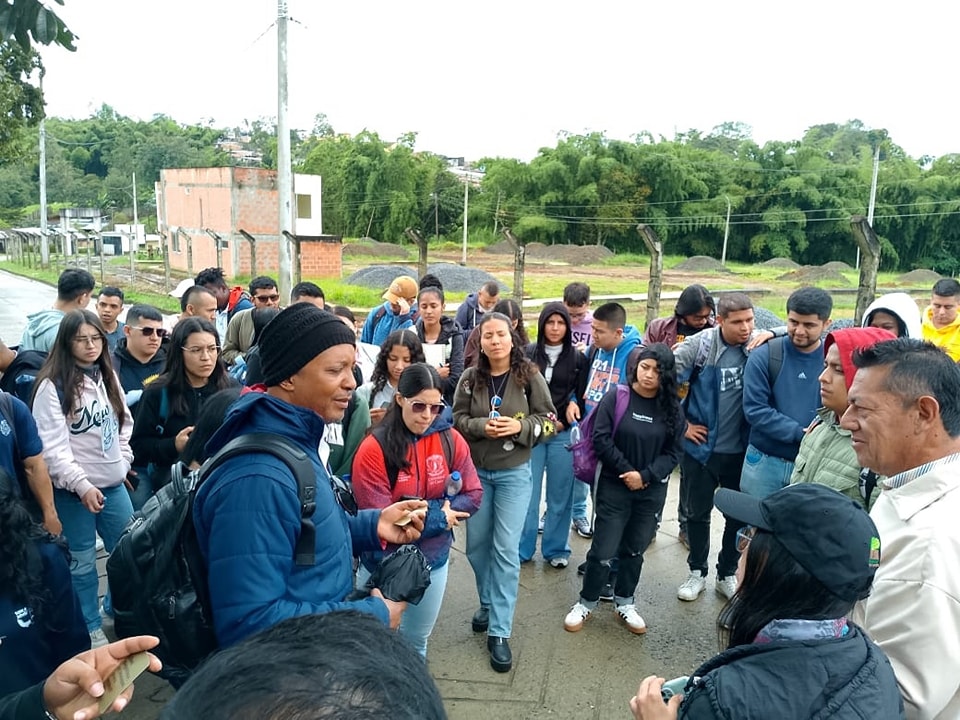
Accordingly, during March 2025, Professor Cortés, accompanied by 27 seventh-semester students from the Environmental Engineering program and 35 tenth-semester students from the Economics program, visited the municipal center of Cajibío and the El Cairo district. In these locations, they received information from officials of the Secretariat of Agriculture and Environment regarding ongoing activities and projects that have an impact in terms of the municipality’s development and sustainability. Subsequently, they administered surveys on residents’ perceptions of the problems present in the community and conducted interviews with several social leaders regarding their perspectives as representatives of civil society.
Fotografía: suministrada.
Provided Photo.
The outcome of this experience has been so positive that Professor Cortés and his students are planning to carry out two additional visits. One visit will be to the Smurfit Kappa company’s plant in Yumbo, Valle del Cauca, to learn about the entire process of transforming the wood extracted from Cajibío. The second field trip will once again be to the municipality in Cauca, in order to observe the company’s forest planting process and to conduct surveys aimed at determining how cohesive social organizations are in defending the territory and in carrying out joint activities and projects that are essential to achieving sustainability in the region.
“The importance of carrying out these activities through these pedagogical models lies in the fact that students, and future professionals, gradually become attuned to the stakeholders, the context, the landscape, and the socioeconomic and ecological problems affecting the department of Cauca. In this way, once they graduate, they can support us through their professional practice in achieving a higher level of development in these municipalities,” emphasized Professor Raúl.
This type of initiative will always be a source of great joy and pride for our institution of higher education and regional thought, as it demonstrates the pedagogical vocation of our faculty, their willingness to foster dialogue between academia and the community, and their interest in building appropriate and sustainable progress for the regions. We look forward to sharing further updates on these actions very soon, which undoubtedly strengthen our presence in the territory.