The Global Ranking of the Sustainable Development Goals (SDGs) is an international measurement developed by the Times Higher Education Impact Rankings, which evaluates the impact of universities on the fulfillment of the 17 SDGs proposed by the United Nations (UN). Let us recall that the SDGs constitute a universal call to action to end poverty, protect the planet, and improve people’s lives and prospects around the world. This ranking, in particular, examines aspects such as research, teaching, community engagement, institutional management, and sustainable policies, with the objective of recognizing higher education institutions that actively contribute to building a more just, equitable, and sustainable world.
With an evaluation of more than 2,000 universities worldwide, based on indicators that measure their contribution to global sustainability in dimensions such as research, teaching, social outreach, institutional management, and well-being policies, the 2025 edition included only 17 Colombian universities in the classification. According to the results published by Times Higher Education, the University of Cauca and the University of Cartagena appear in the 1001–1500 global range. Both institutions, recognized for their territorial impact, intercultural approach, and commitment to social transformation through public education, continue through this international measurement to position themselves as benchmarks of academic excellence, inclusion, social justice, and sustainability in both the national and international context.
For the University of Cauca, participating for the first time and being ranked in the Global Ranking of the Sustainable Development Goals (SDGs) constitutes an unprecedented milestone that fills its entire university community with pride. It is a recognition that reflects its commitment to a more just, equitable, and sustainable future, as well as its determination to increasingly generate a positive impact on university life and territorial dynamics. In this regard, Andrés Felipe Rivera Fierro, head of the Office of Planning and Institutional Development at Unicauca, stated: “This recognition reaffirms our purpose of positively transforming the life of our university community through the prioritization of resources toward the development sectors that need them most. This roadmap sets the course for university planning in the short, medium, and long term.”
The achievement is even more significant considering that, although this is the first time the University of Cauca has participated in this international measurement, it was successfully ranked, meeting the demanding criteria for transparency, data verification, and technical standards established by Times Higher Education. This result was made possible through a coordinated process of institutional diagnosis, systematization, and evaluation, involving different offices and work teams. Currently, Unicauca is moving forward with the development of its own set of indicators aligned with the SDGs and with the consolidation of the UniCauca in numbers system, a key tool for monitoring, guiding decision-making, and facilitating public accountability.
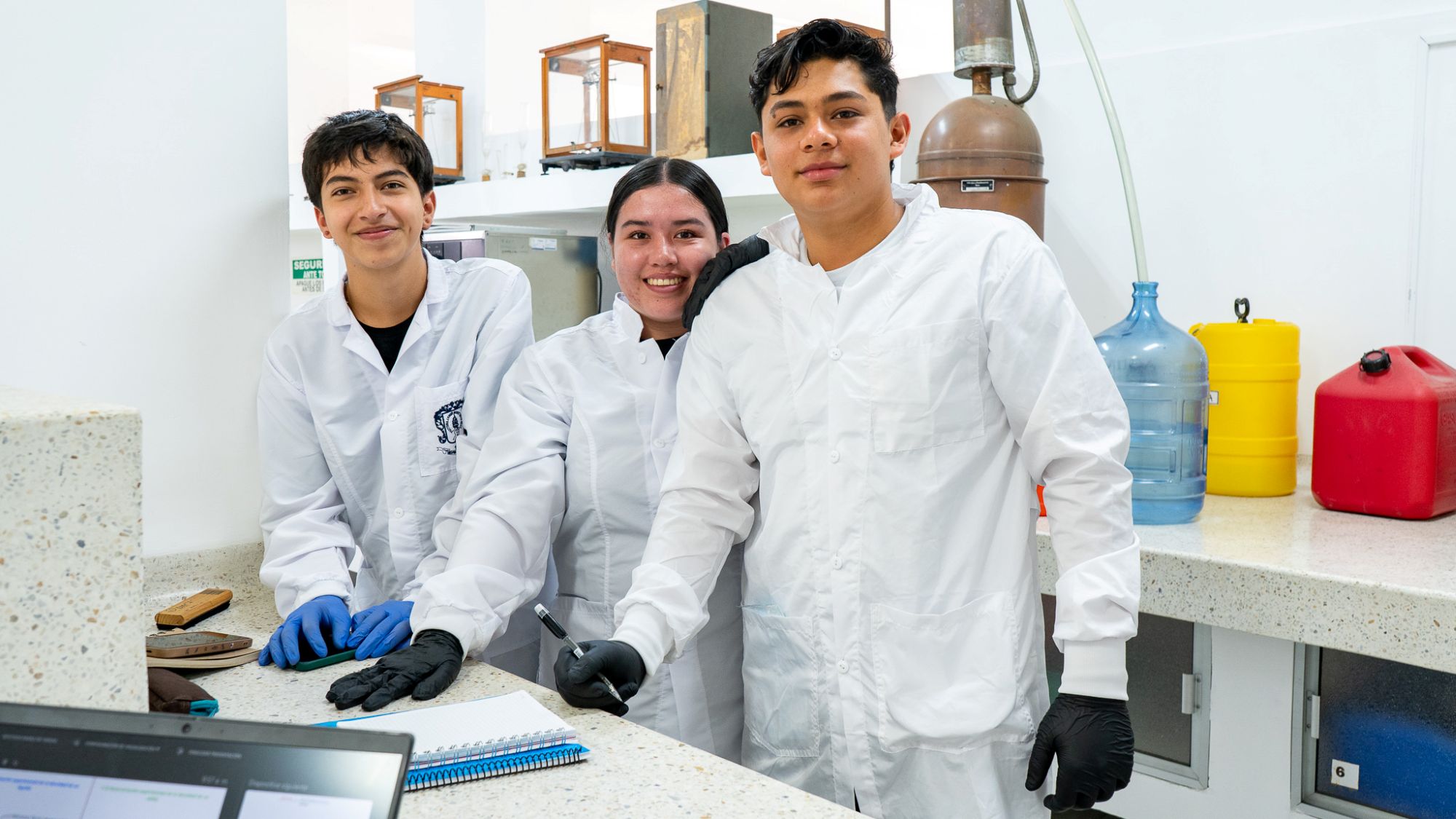
For the University of Cartagena, this international recognition is fully aligned with its 2022–2026 Strategic Development Plan, “Toward a Transformative and Humanistic University,” in which the research, innovation, and knowledge management pillar establishes clear goals in scientific productivity, academic cooperation, and global positioning. In this context, the ranking represents an external validation of its institutional strategy. “The recognition confirms that the investments in laboratory infrastructure, academic mobility, and international partnerships outlined in the plan are generating measurable impacts. It also provides a benchmark for the remaining phases, including the consolidation of research networks and the expansion of dual-degree programs. In short, the ranking is not an end in itself, but an external indicator that the path charted by the University of Cartagena toward its Bicentennial is advancing steadily and grounded in verifiable results,” stated Harol Gómez Estrada, Vice President for Research at the University of Cartagena.
Both universities agree that this type of measurement should not be taken as a goal in itself, but as a tool that helps strengthen planning, make good practices visible, and reaffirm their presence in the territories. And although for the University of Cauca this was its first year of participation and it successfully achieved classification, and for the University of Cartagena this new inclusion consolidates a rising institutional trajectory committed to the Sustainable Development Goals, these are two paths that now converge on a shared commitment: to build, from public higher education, a sustainable and transformative future on the road to the Bicentennial.
“Our inclusion for the first time in the Global SDG Ranking validates a collective and committed effort by the entire university community. This recognition makes visible the work we carry out from the territories, with an intercultural approach, equity, and social responsibility. Positioning ourselves among more than 2,000 universities worldwide, after being evaluated in health, education, clean energy, equity, and partnerships, demonstrates that our public, high-quality, and supportive university has a real impact. On the road to the bicentennial, it is a firm step that fills us with pride and commits us even more,” emphasized with emotion Deibar René Hurtado Herrera, Rector of Unicauca.
A shared achievement in the BICENTENNIAL FRAMEWORK
The inclusion of the University of Cauca and the new appearance of the University of Cartagena in the Global Ranking of the Sustainable Development Goals (SDGs) by Times Higher Education (THE Impact Rankings) affirms the role both institutions have historically played in social transformation, the development of their territories, and the consolidation of a public education with a human, ethical, and sustainable focus.
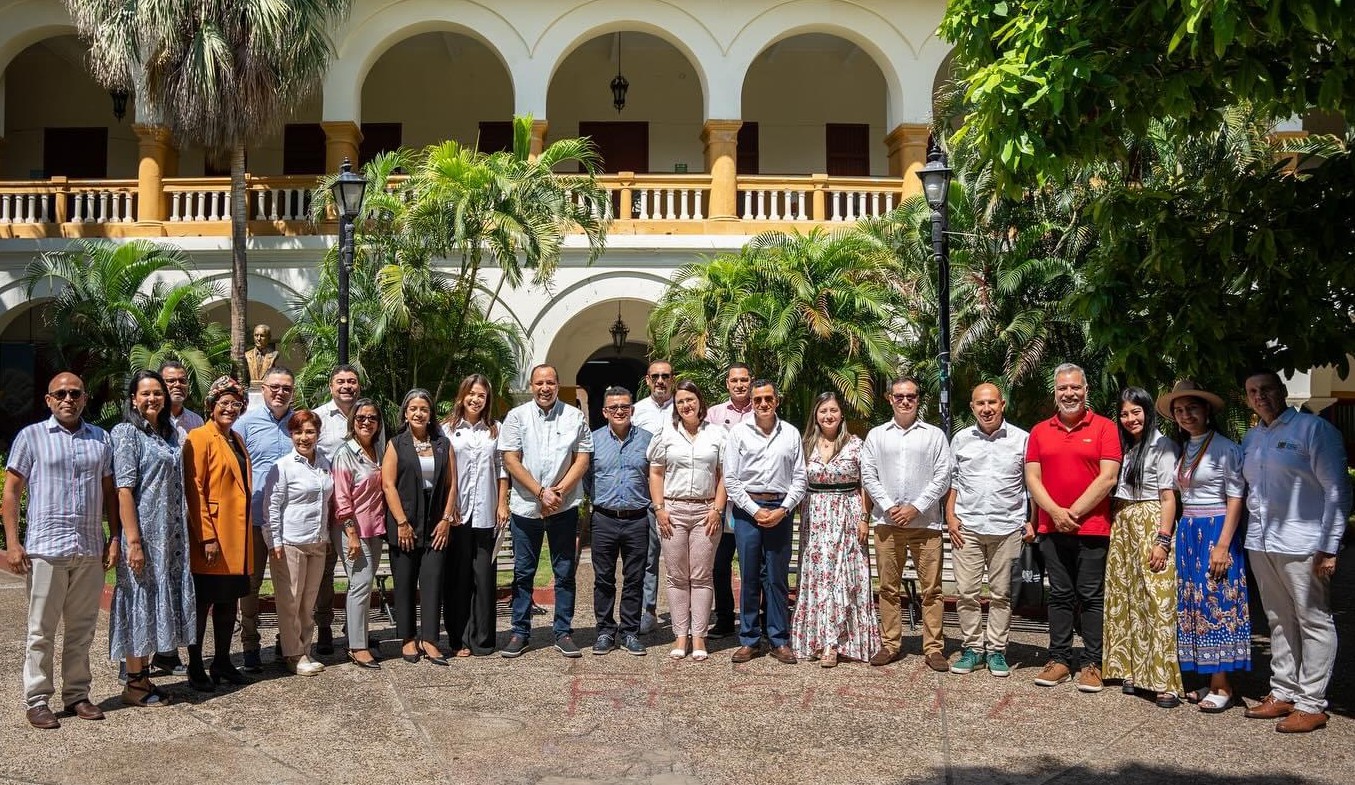
This positive news takes on special significance in the context of the road toward the Bicentennial that both universities will celebrate in 2027. With nearly two centuries of history, these sister institutions have been pillars in the construction of national thought and in the education of generations committed to the country. Today, that legacy is projected forward through a strong academic vision that engages with the SDGs from a territorial, intercultural perspective deeply committed to equity.
Under the leadership of their rectors, Deibar René Hurtado Herrera and Willian Malkún Castillejo, the University of Cauca and the University of Cartagena have turned the bicentennial agenda into a strategic element of academic innovation, linking historical memory with the development of talent at the highest standards. As part of this agenda, joint initiatives have been promoted, such as the forum at the Gabo Center–Unicauca in Bogotá, serving as a prelude to a series of traveling discussions on the role of public universities in achieving the SDGs, as well as editorial and research calls supported by their institutional publishing houses and their coordinated participation in the Bogotá International Book Fair (FILBo).
For the rector of the Cauca alma mater, Deibar René Hurtado Herrera, joining efforts around such an important milestone for the nation implies consolidating a strategic alliance that goes beyond commemoration to become a platform for innovation, social justice, and territorial transformation. “The joint agenda between the University of Cauca and the University of Cartagena, our bicentennial universities, is more than a meeting between sister institutions: it is an ethical commitment to the country, to public education, and to historically marginalized territories. They have been beacons of critical thought and defenders of university autonomy. Today, within the bicentennial framework, we unite capacities not only to commemorate, but to project a more open, relevant public university aligned with the SDGs. This alliance allows us to share best practices and to advance common agendas in open science, employability, and environmental justice, with the conviction that the country’s southwest and the Caribbean region have much to contribute to national transformation,” he stated.
For his part, Harol Gómez Estrada, Vice President for Research at the University of Cartagena, stated: “The Bicentennial agenda is not a commemorative milestone, but a strategic platform where open science, educational innovation, and institutional intelligence converge to transform our regions with global impact.” The official explained that these initiatives incorporate tools such as data analytics, artificial intelligence, and semantic technologies to map research trends, identify curricular gaps, and shape high-impact editorial lines. In this model, editorial projects cease to be conventional compilations and instead become open, interoperable digital repositories with greater international reach.
Gómez Estrada also affirmed that, along a second line of action, both universities are leading an intersectoral pact with business leaders and departmental governments in Cauca and Bolívar, aimed at incubating projects in the green economy, environmental justice, and youth employability. Predictive algorithms make it possible to identify technology transfer opportunities; adaptive learning platforms personalize educational pathways; and territorial digital twins simulate sustainable development scenarios. At the same time, the digitization of the historical archives of the University of Cartagena, using optical recognition and semantic metadata, strengthens applied research based on heritage resources.
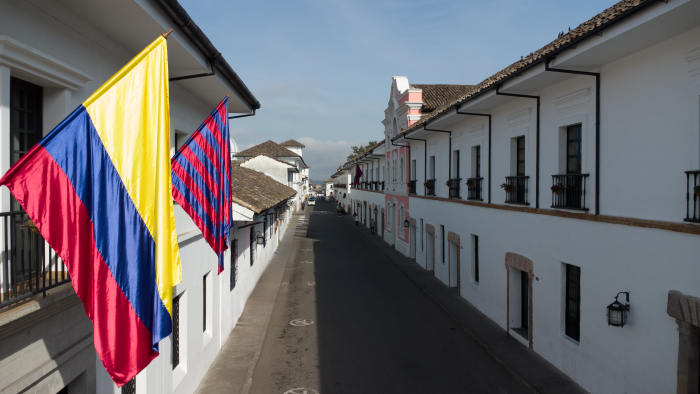
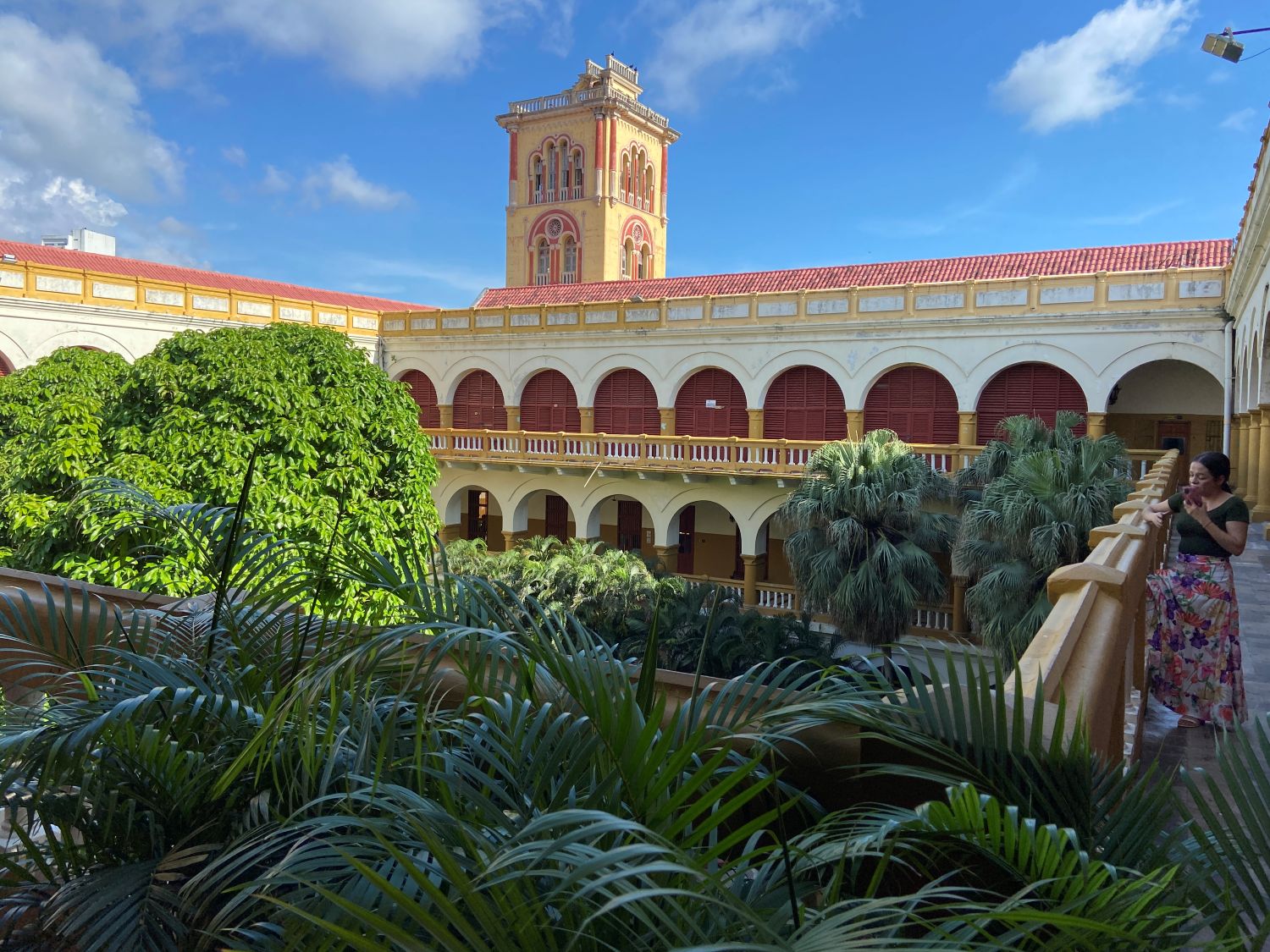
With real-time dashboards that report directly to the rectors, this alliance is being consolidated as a living laboratory of open science, cutting-edge education, and interinstitutional cooperation, capable of transforming Colombia’s Caribbean and Southwestern regions while expanding its global reach. And because together they are stronger, from Popayán and Cartagena, from the Andes and the Caribbean, these two sister universities celebrate this recognition as a shared promise: on the road to their first 200 years, they will continue building, through high-quality public education, a more just, sustainable, and transformative future for Colombia.
Address: Calle 5 # 4 - 70 | Popayan, Colombia
Opening hours:
Monday to Thursday from 8:00 a.m. to 5:00 p.m. - Friday from 8:00 a.m. to 4:00 p.m.
Telephone: +57 (602) 820 9900
Toll-free: 018000 949020
Court notifications
Institution with High Quality Accreditation for 8 years, resolution MEN 6218 of 2019 - Vigilada MinEducación
NIT. 891500319-2
Address: Calle 5 # 4 - 70 | Popayan, Colombia
Telephone: +57 (602) 820 9900
Toll-free: 018000 949020
Requests, Complaints, Claims, Suggestions and Congratulations
Email: ventasreclamos@unicauca.edu.co
Judicial notifications
Email:processes@unicauca.edu.co
Institution with High Quality Accreditation for 8 years, resolution MEN 6218 of 2019 - Vigilada MinEducación