Encuentra lo que necesitas en segundos. Explora, descubre y obtén respuestas rápidas. ¡Comienza tu búsqueda ahora!
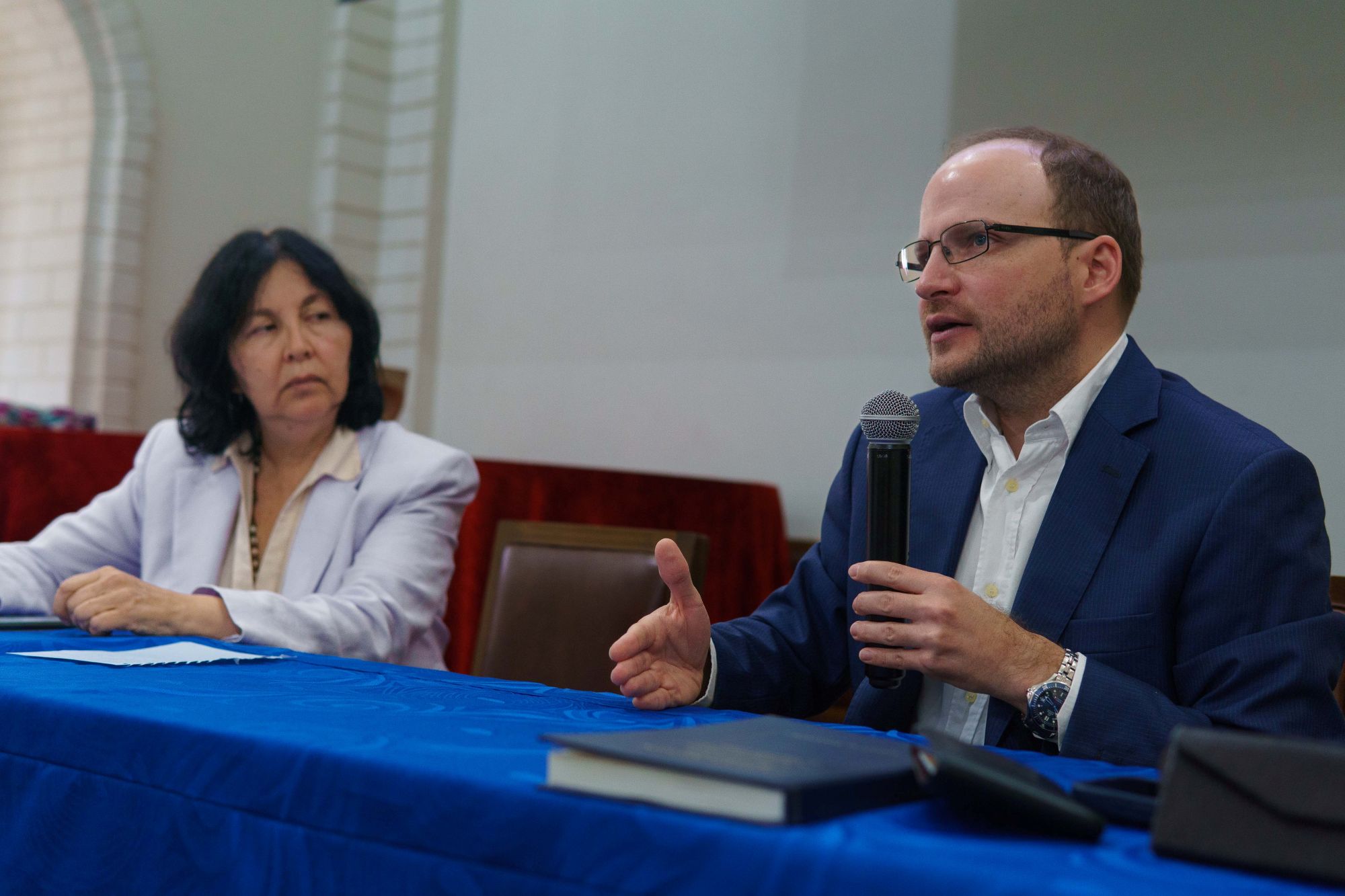
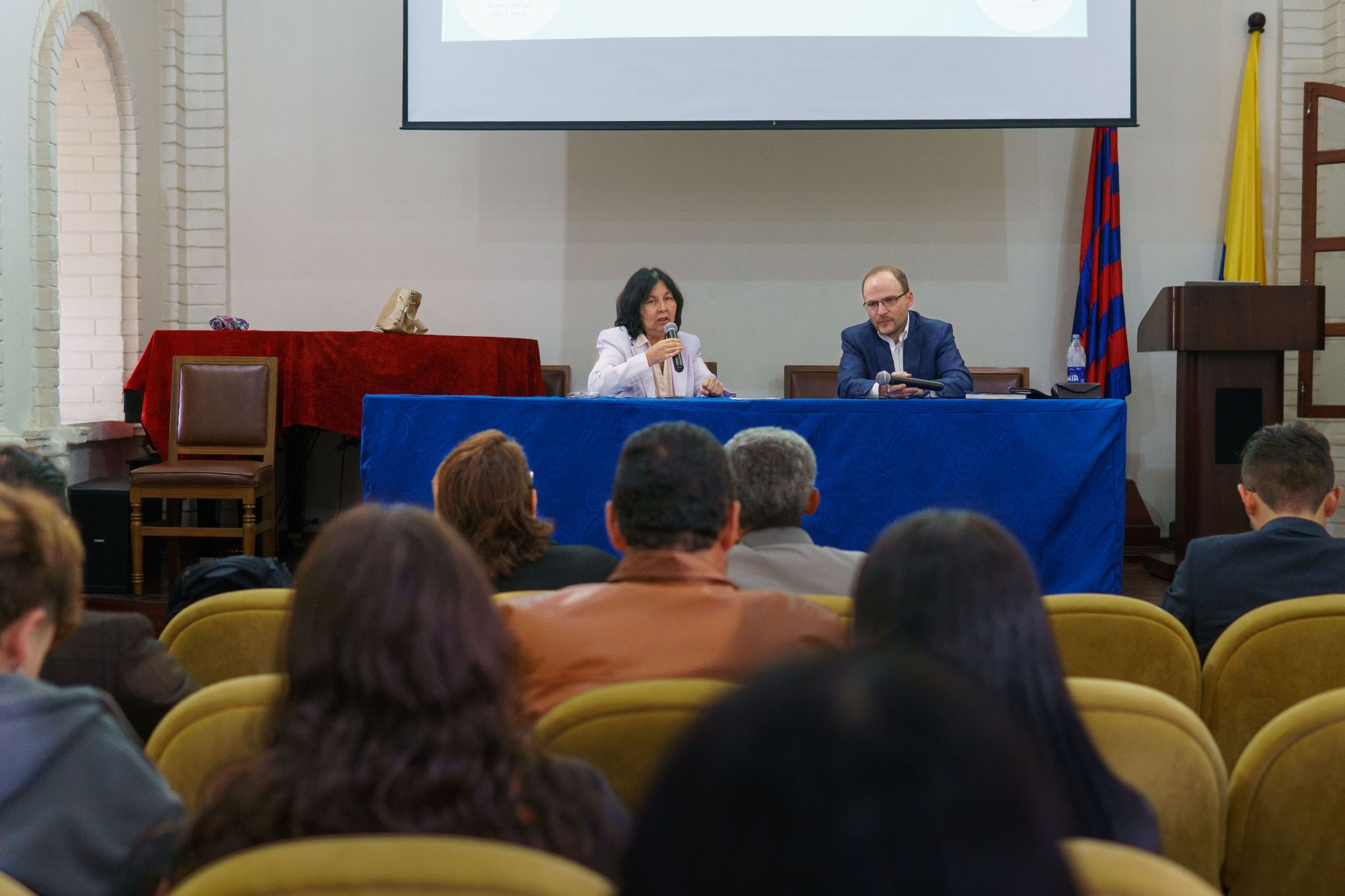
With prominent national jurists, the 2025 Public Law Conference was held in the Founders’ Hall of the Alma Mater of Cauca. The idea behind this event, notes Professor Kenny Elizabeth Campo Sarzosa, director of the Research Group on Law, Constitution, and Democracy, is to create an academic space for discussion and reflection on constitutional issues related to administrative law, environmental law, gender issues, international law, and transitional justice.
Francisco José Chaux, professor of Constitutional Law at the Pontifical Javeriana University in Bogotá and one of the main speakers at the conference, points out that the first duty of every citizen in a constitutional democracy is to defend the Constitution. “It is not a mere truism that it invites us to take ownership of its teachings, because the Constitution is based on the assumption of the individual’s ingenuity, of that intrinsic dignity, of that capacity to be the holder of rights, and also of obligations. For this reason, our first obligation as citizens is to defend our Constitution.”
Within this framework, it is necessary to take into account, reaffirms Francisco José Chaux, that all rights carry an implicit clause not to abuse them, and to understand that just as I have rights, others do as well. All these rights come together in a remarkable unity we call the human being, and just as I deserve respect, others deserve it too; hence the need to have a deep consideration for opposing opinions.
The call during his lecture at the University of Cauca is not to be swayed by the siren songs that seek to undermine the three branches of government, which would drown us as a democracy and as a nation. One of the purposes of the separation of powers is not to make the State inexpensive or cost-efficient, but quite the opposite: to ensure checks, balances, and security systems that minimize violations of people’s rights.
For Professor Campo Sarzosa, constitutions are aspirational, in the sense that they are the great agreements we, as citizens, make regarding what we want to be, especially when constitutions are not fully effective. “The task from academia and citizenship is to continue contributing to this unfinished process; the aspiration centered on our great goals: democracy, the fulfillment of people’s rights, their basic needs, and the balance among the branches of power.”
“Being a citizen is the best title we can have. We are not subjects or dependents of a crown; we are citizens capable of observing, reading, understanding, and debating. Let us not remain with a single perspective, we can have many, and precisely Cauca is a fantastic territory, a seedbed for legal pluralism,” concluded Professor Francisco José Chaux.
Address: Calle 5 # 4 - 70 | Popayan, Colombia
Opening hours:
Monday to Thursday from 8:00 a.m. to 5:00 p.m. - Friday from 8:00 a.m. to 4:00 p.m.
Telephone: +57 (602) 820 9900
Toll-free: 018000 949020
Court notifications
Institution with High Quality Accreditation for 8 years, resolution MEN 6218 of 2019 - Vigilada MinEducación
NIT. 891500319-2
Address: Calle 5 # 4 - 70 | Popayan, Colombia
Telephone: +57 (602) 820 9900
Toll-free: 018000 949020
Requests, Complaints, Claims, Suggestions and Congratulations
Email: ventasreclamos@unicauca.edu.co
Judicial notifications
Email:processes@unicauca.edu.co
Institution with High Quality Accreditation for 8 years, resolution MEN 6218 of 2019 - Vigilada MinEducación