University of Cauca, supportive and committed to the territory in Santander de Qu...
University of Cauca, supportive and committed to the territory in Santander de Quilichao
11 March, 2026
The Research Group in Natural Hazards, Risk and Territory, together with the organized communities of Santander de Quilichao, is committed to this initiative, arising from a community need: access to this vital resource in a sustainable manner.
In the village of Guayabal, located in the municipality of Santander de Quilichao, a collective effort has been taking shape to guarantee something as essential as access to drinking water.
The initiative, promoted by the Research Group in Natural Hazards, Risk and Territory, affiliated with the Civil Engineering program at the University of Cauca, Santander de Quilichao campus, arose from a community need: access to this vital resource in a sustainable manner.
It was precisely this concern that motivated the inhabitants, represented by the Association of Aqueduct Users, to seek technical support.
The University of Cauca, committed to processes of solidarity with the territory, responded with an initial outreach session that combined academic knowledge with community experience.
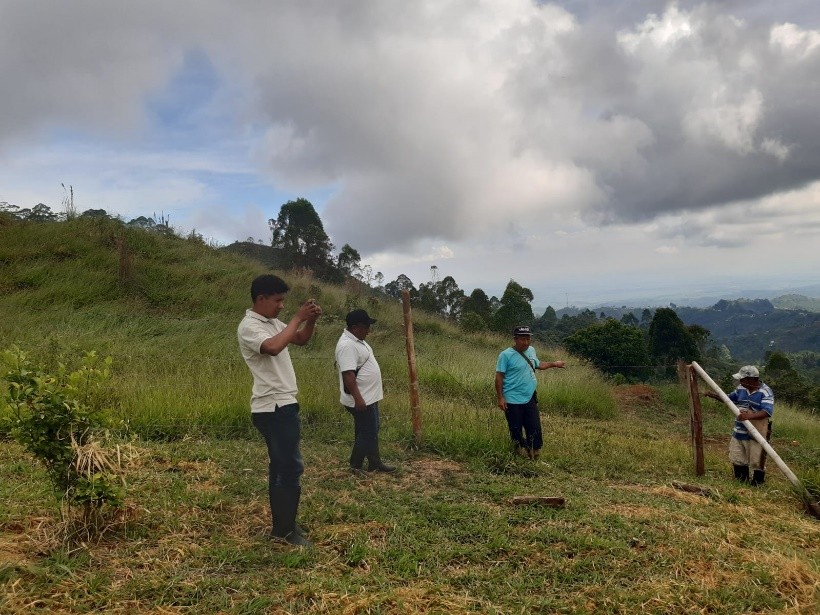
Fotografía: InPhotograph: Members of the research group and community leaders tour the village of Guayabal during the diagnostic day.tegrantes del semillero de investigación y líderes comunitarios recorren la vereda Guayabal durante la jornada de diagnóstico.
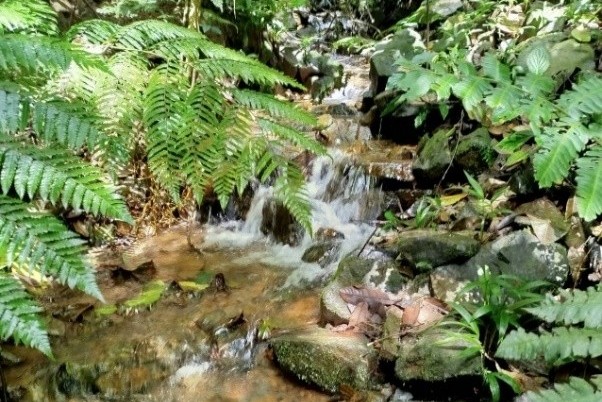
Photograph: Quebrada La Arenosa, potential site for water intake, explored during the community visit.
The purpose of this visit, carried out on July 25, was clear: to understand the local context, identify the available water sources, and gather baseline information in order to move forward in designing a viable solution adapted to the conditions of the village of Guayabal. During the tour of the territory, potential intake sources were located, homes and users were georeferenced, and spaces for dialogue were established with community leaders.
The day included the active participation of representatives of the Association of Aqueduct Users, such as leader José Antonio Ipia, Fredy Martínez, and Mauricio Ayala, who shared key information about the territory. On behalf of the University of Cauca, the coordinator of the Civil Engineering program, Edgar Rodríguez Castiblanco, Enif Medina, and senior student Anyelo Fernández were present. It is important to highlight that this territory is part of the Munchique – Los Tigres Indigenous Reservation, which allows for the approach and integration of ancestral knowledge and technical concepts.
This cultural aspect represents a key element to consider when planning and executing any type of intervention.
The outcome was highly positive; a firm step was taken toward the construction of a proposal that, in the future, could significantly improve the living conditions of the families in the village.
From the research seedbed, the importance of continuing to support this type of initiative is highlighted, initiatives that not only seek to solve structural problems, but also to promote more equitable relationships between academic knowledge and the realities of the territory.
“Access to drinking water is a fundamental right, and to make it possible in rural areas it is necessary to join efforts, listen to communities, and build solutions collectively,” the participants concluded.
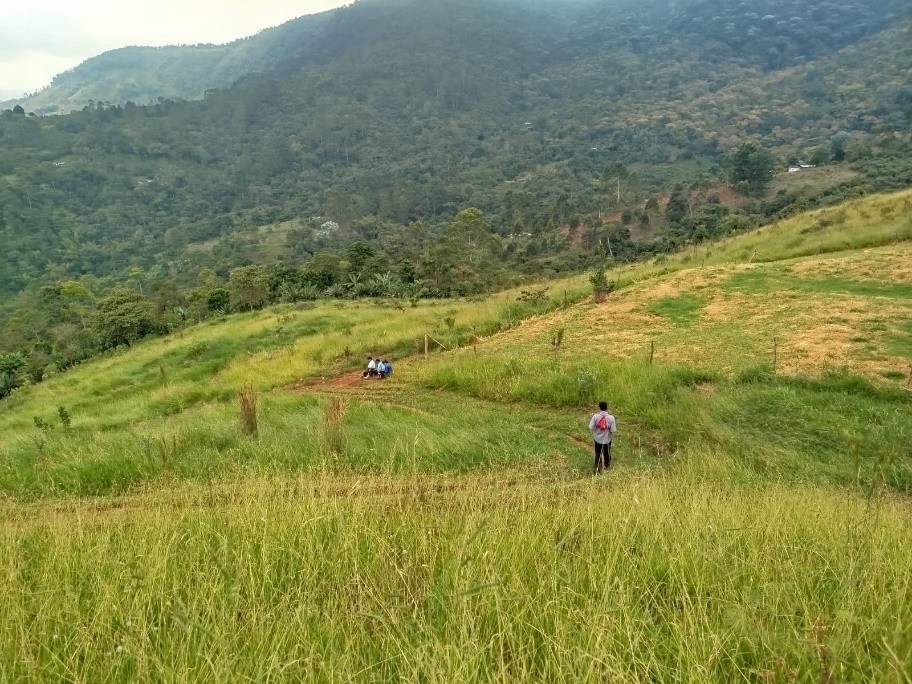
Photograph: Analysis of terrain conditions for the possible siting of infrastructure