Encuentra lo que necesitas en segundos. Explora, descubre y obtén respuestas rápidas. ¡Comienza tu búsqueda ahora!
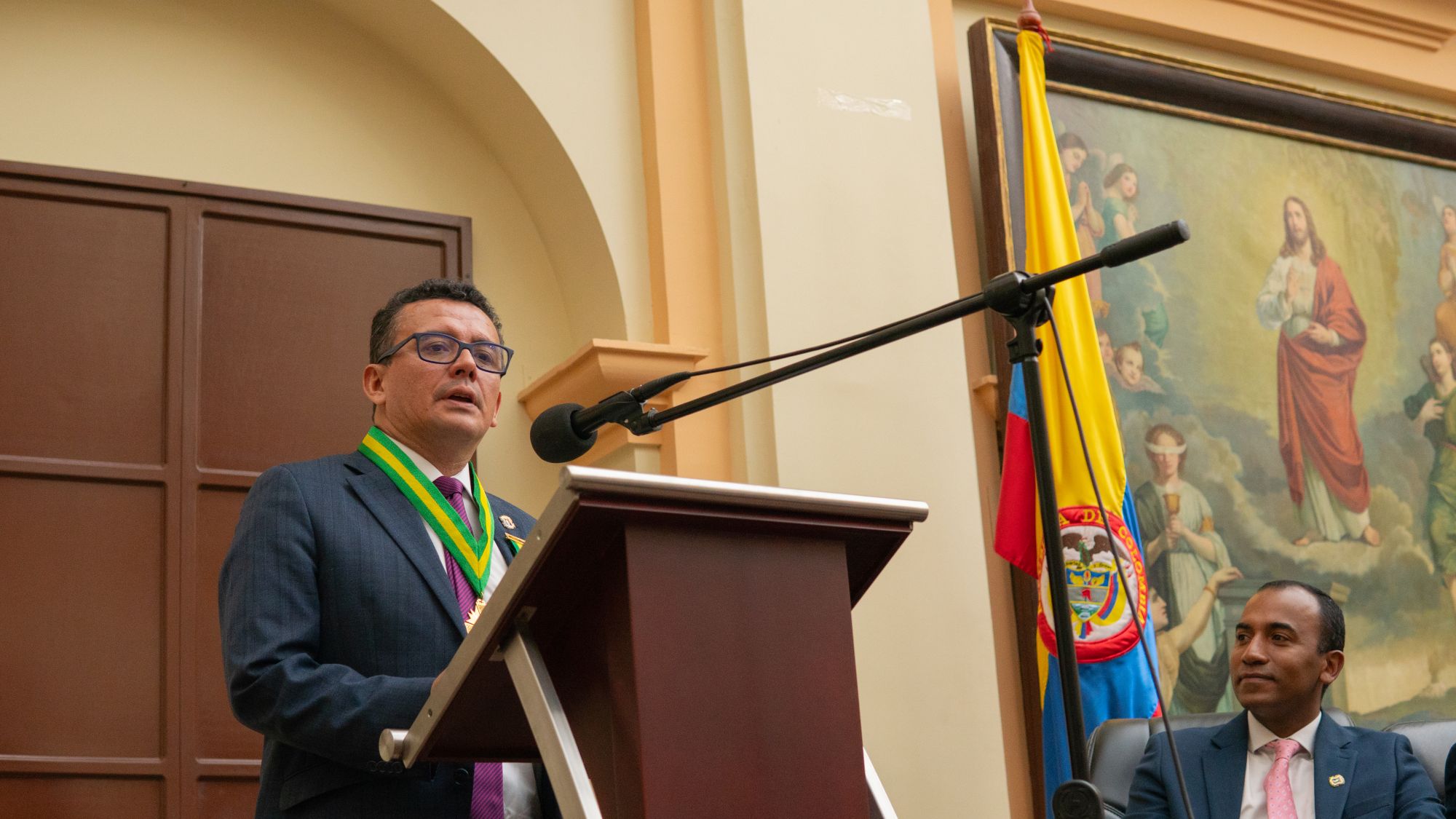
The issuance of Decree 0391 of April 1, 2025, by the Ministry of National Education represents a significant advancement for the public higher education system in Colombia. A step we welcome with hope at the University of Cauca, convinced that dignifying the working conditions of those who make the university possible (faculty and administrative staff) is not only a historic debt, but an ethical imperative.
This decree proposes that public universities design and implement Labor Formalization Plans under principles of merit, transparency, and stability. It is an important decision that recognizes the need to consolidate stable employment relationships and to strengthen the human capital that makes public higher education possible. However, for this purpose to materialize, it requires more than regulatory intent: it demands solid, structural, and progressive funding from the State to make it viable and sustainable over time.
We have done it and we are doing it: stories with figures and faces
At the University of Cauca, we have not waited for external regulations to compel us to act. On the contrary, we have responsibly assumed our own institutional commitments and moved forward with conviction.
This is established by Higher Council Agreement 085 of 2021, issued by the University Higher Council, which clearly and categorically states the need to hold public merit-based competitions to fill tenured faculty positions whenever a vacancy arises due to retirement, pension, resignation, or death. This regulatory obligation is consistent with our vision of a university that reaffirms its people as its most valuable asset and that is built upon the principles of merit, transparency, academic quality, excellence, and solidarity.
Based on this regulatory framework, between 2023 and 2025, the University of Cauca has launched three public merit-based competitions for half-time and full-time tenured professors, which are part of the Call Plan proposed by this University Administration:
In 2023, two calls for applications were carried out. The first, through Rectoral Resolution 0378, offered 4 positions, all of which were successfully filled. The second, established by Resolution 0836, opened 27 additional positions for various faculties and departments. Of these, 15 were effectively filled, while 12 were declared vacant after the process concluded without selected candidates.
In 2024, based on the previous results and in compliance with Higher Council Agreement 085, the University of Cauca opened Call 2024-1 (Rectoral Resolution 1313 of 2024), offering 45 tenured faculty positions, both full-time and half-time. This call includes both newly generated vacancies and the reincorporation of the 12 positions that remained unfilled in the previous process, thus reaffirming our commitment to continuity and transparency. The process is currently in the interview and final evaluation stage, and appointments are scheduled for the first academic term of 2026.
These processes not only respond to an internal regulation but also represent the ethical and academic commitment to ensure stable working conditions, promote merit, and strengthen educational quality.
The decision to move forward consistently with these competitions has also represented a significant budgetary commitment. The recognition of academic degrees, scholarly output, and the 46-week appointments for full-time and half-time adjunct professors has involved an institutional investment exceeding 72 billion pesos, undertaken responsibly by the University of Cauca.
Behind every figure there are faces and life paths. There are professors who find stability, students who gain access to strengthened education, and a public university that honors its principles with actions. This path has been made possible thanks to a clear policy, a committed community, and an institution that does not improvise when it comes to defending the public sphere with responsibility and coherence.
Reality check: without resources, commitments remain on paper
Decree 0391, although it represents an important regulatory step forward, transfers to public universities a financial responsibility that, under current conditions, exceeds our budgetary capacities. The formalization of teaching and administrative staff employment is a goal we fully share, but its implementation requires more than willingness: it demands a robust and sustained financial foundation consistent with the scale of the transformation being pursued. According to our institutional analysis, we require an additional 135 billion pesos added to the base budget.
From the University of Cauca, and within the framework of the coordination spaces of the State University System (SUE), we have maintained an ongoing and constructive dialogue with the National Government. In these settings, we have reiterated that, while we are ready to lead and move forward with formalization plans, it is neither viable nor responsible to do so without the allocation of additional resources that guarantee their sustainability.
The appeal we make is neither a warning nor a resignation: it is an appeal to the principle of reality. Public universities cannot bear alone a reform that, due to its scope and impact, must be understood as a national policy, financed with principles of equity, progressivity, and institutional co-responsibility. The commitments of the State cannot remain on paper. They require concrete, timely, and sufficient backing.
Formalization is a commitment with responsibility, not a declarative gesture
From Popayán, from the Alma Mater of the people of Cauca, which is preparing to commemorate two centuries of history in service to the country, we reiterate clearly: we are willing to continue advancing, but we cannot do it alone. The formalization of teaching and administrative work cannot depend solely on institutional effort. It is a responsibility that must be shared, led, and sustained by the State.
There is no quality without stable working conditions. There is no excellence without recognition. There is no merit without guarantees. That is why we insist: the implementation of Decree 0391 must go hand in hand with a financed, coherent, and progressive public policy that allows universities to fulfill this mission without compromising their fiscal balance or weakening their core functions.
At the University of Cauca, we have demonstrated that we have the will and the know-how to do this. But formalization cannot be a symbolic gesture or a promise cast into the air; it requires acting with responsibility. In this case, that responsibility falls upon the National Government.
Only with this real commitment can words be translated into sustainable transformations. Because a public university is not built with speeches, but with decisions. And the formalization of human talent is not declared: it is guaranteed.
Address: Calle 5 # 4 - 70 | Popayan, Colombia
Opening hours:
Monday to Thursday from 8:00 a.m. to 5:00 p.m. - Friday from 8:00 a.m. to 4:00 p.m.
Telephone: +57 (602) 820 9900
Toll-free: 018000 949020
Court notifications
Institution with High Quality Accreditation for 8 years, resolution MEN 6218 of 2019 - Vigilada MinEducación
NIT. 891500319-2
Address: Calle 5 # 4 - 70 | Popayan, Colombia
Telephone: +57 (602) 820 9900
Toll-free: 018000 949020
Requests, Complaints, Claims, Suggestions and Congratulations
Email: ventasreclamos@unicauca.edu.co
Judicial notifications
Email:processes@unicauca.edu.co
Institution with High Quality Accreditation for 8 years, resolution MEN 6218 of 2019 - Vigilada MinEducación