The Department of Anthropology has its origins in the archaeological and anthropological research conducted by anthropologist Gregorio Hernández de Alba, together with other researchers, in 1938 with the establishment of the National Archaeological Service, and later with the establishment of the Archaeological Museum of the University of Cauca, organized by Henri Lehmann in late 1942. In 1946, with the support of archaeologist Luis Duque Gómez, Hernández de Alba founded the Ethnological Institute of Cauca, established through Agreement No. 128 of February 1, 1946, with the aim of documenting the ethnographic reality of the regions that made up the former Government of Popayán and their interactions with the other subregions of the country. At the time, the prevailing thinking and indigenist movement shaped a path of anthropological reflection that was considered necessary in some cases to save Indigenous peoples and, in others, to integrate them into the national system.
History of the Department
In 1970, alongside the establishment of the Regional Indigenous Council of Cauca (CRIC), which emerged from the peasant movement of the Association of Peasant Users (ANUC), the Faculty of Humanities was established through Agreement No. 102 of December 10, 1970. It was conceived as “a higher education unit responsible for several related professional programs in the humanities, conducting interdisciplinary research in these fields, and providing services to students from other Faculties of the University of Cauca and to the general public” (Article 2 of Agreement 102 of 1970). With the establishment of the Faculty of Humanities, the Department of Humanities became the Department of Social Sciences, which administered the Anthropology, Psychology, Sociology, and History sections. The Department, “together with the Institute of Social Research and the José María Arboleda Historical Research Institute, constitutes an organization for the study, research, and service in this specific field of the sciences” (Article 4 of Agreement 102 of 1970). The Faculty also included the Departments of Philosophy and Literature, Education, Fine Arts, and Music.
Formulation of the Anthropology Study Plan Approved by Agreement 20 of July 10, 1973
After three years of offering service courses to the other Faculties of the University, also known as humanities courses (e.g., Anthropology, Sociology, Psychology, and History), and providing outreach services, the first Study Plan for the Bachelor’s Degree in Anthropology was formulated and approved through Agreement 20 of July 10, 1973. Since then, the program has undergone four reforms (1976, 1985, 1995, and 2005) and is currently on the verge of a fifth curricular reform. For two decades, the program has promoted anthropological research, reflected in the dynamic formation of six research groups: Antropacifico, Anthropos, Archaeology of Southwestern Colombia, Southwestern Studies in Linguistics and Pedagogy, Comparative Social Studies, and Gastronomic Heritage.
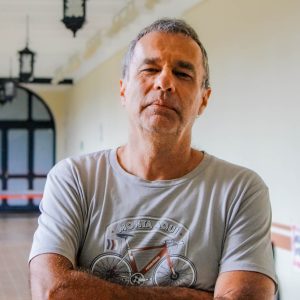
Cristóbal Gnecco
Head of the Department of Anthropology
Anthropologist from the University of Cauca,
Master's Degree in Anthropology, Washington University, and PhD in Anthropology, Washington University.
Availability of televisions, digital cameras, video projectors, sound equipment, and video cameras.
Availability of televisions, digital cameras, video projectors, sound equipment, and video cameras.
Availability of the infrastructure and various equipment provided by the Communications Division of the University of Cauca.
Bibliographic Materials
Access to a documentation center specializing in bibliographic materials, a video library, aerial photographs, slides, and degree theses that complement the resources already available in the institution’s other libraries.
Availability of materials to which the University of Cauca has access through agreements established with the Ibero-American Consortium for Science and Technology (UISTEC), the Luis Ángel Arango Library, university networks that use the Unicorn System, and other libraries and higher education institutions at the national level.
Computer Rooms
Access to a computer room located in the Faculty of Humanities and Social Sciences of the University of Cauca.
Availability of the equipment located in the Central Library, the Data Network, and the rooms available in the institution’s nine (9) faculties, where they can prepare assignments and access information on the Internet.