• Aumentar letra
  • Reducir letra
  • Aumentar Espaciado
  • Disminuir Espaciado
  • Escala de Grises
  • Contraste
  • Fuente Dislexia
  • Restablecer
  • Centro de relevo

Encuentra lo que necesitas en segundos. Explora, descubre y obtén respuestas rápidas. ¡Comienza tu búsqueda ahora!

Master’s Program in Arts Integrated with the Environment

Faculty of Humanities and Social Sciences

Master's Program in Arts Integrated with the Environment

I WANT TO APPLY

Icono de Título que Otorga el programa

Degree Awarded

Master of Arts Integrated with the Environment

Icono Valor Matricula

Tuition Fee per Semester

6 SMMLV.

Icono Ubicación del programa

Location

Popayán.

Icono de Duración del programa

Duration

Cuatro (4) semestres.

Program Overview

Qualified Registration: Resolution No. 06190 of May 6, 2015.

SNIES Code: 104456.

Program Coordinator: Mario Armando Valencia.

Program Email: maestria_maia@unicauca.edu.co

Schedule: Mixed.

Admission Frequency: Annual.

Number of Credits: 44.

Faculty to which the program belongs: Faculty of Humanities and Social Sciences.

Mode: In-person.

Program Description

The Master’s Program is the result of a partnership between the University of Cauca and the Colegio Mayor del Cauca University Institution (IUCMC), through different academic centers belonging to both institutions. The Master’s Program seeks to contribute to the education of professionals in the Humanities, Arts, and Social Sciences in the fields of Arts Integrated with the Environment, through the conception, development, and implementation of research and aesthetic creations that establish an ethically meaningful relationship among environmental issues, identity, aesthetic theory, and practice, with the aim of promoting actions, from Latin American sensibilities, capable of constructively addressing matters, topics, and issues related to the global climate crisis and the environment.
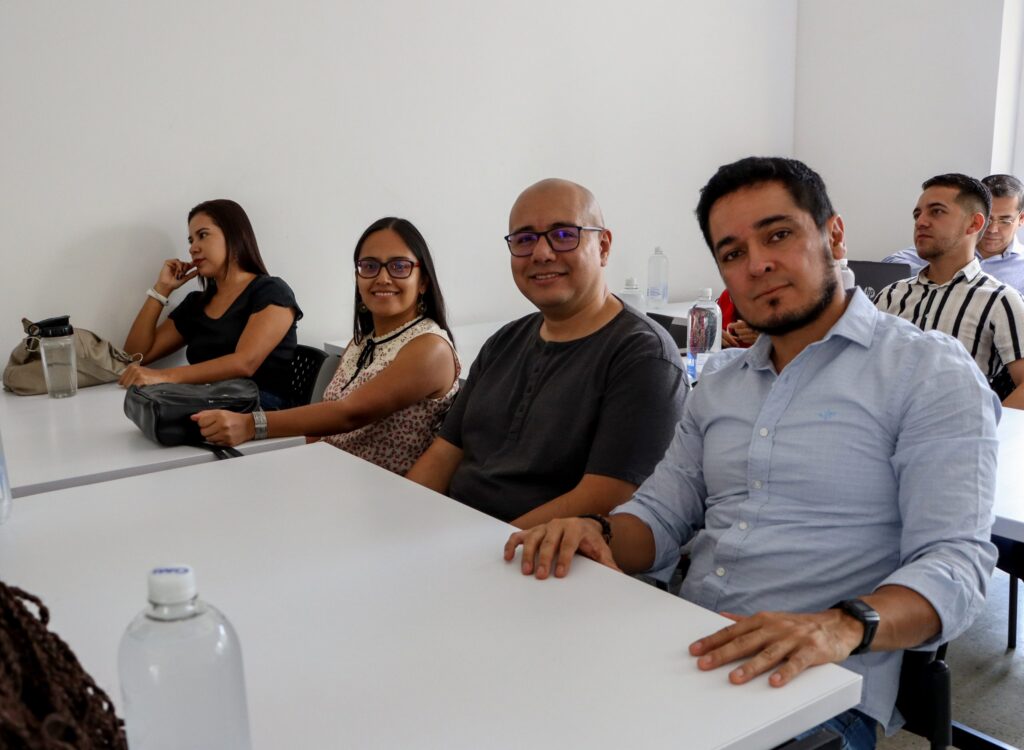
Because it offers a unique opportunity for professionals in the Humanities, Arts, and Social Sciences who wish to address environmental challenges and the global climate crisis in a creative and ethical manner. Graduates of this program will be prepared to conceive, implement, and promote artistic and research projects that effectively address environmental and cultural issues. In addition, this master’s program focuses on Latin American sensibilities, making it particularly relevant for contributing constructively to understanding and taking action on environmental issues, identity, and ethics in the current context of the global environmental crisis.

General Program Objective

To train professionals in the Humanities, Arts, and Social Sciences with an in-depth understanding and an ethical perspective regarding environmental issues and the global climate crisis. This training seeks to equip students with the skills to conceptualize, develop, and conduct research and aesthetic creations that establish a meaningful connection among environmental challenges, identity, aesthetic theory, and practice.

Specific Objectives

  • Rethink and reorient the relationships among art, philosophy, and the social, cultural, and environmental context from the specific contexts of Cauca, southwestern Colombia, and Latin America, as essential points of reference for developing and producing knowledge capable of intervening in and generating beneficial impacts on communities.
  • Integrate historically separate forms of knowledge and artistic languages (visual arts, literature, and music), and build close connections between these practices and contemporary environmental issues, particularly the global climate crisis, drawing on the approaches and opportunities for impact inherent in the social sciences, humanities, and arts.

Occupational Profile

  • Environmental Artivists: They can lead or participate in artistic and activist projects that address environmental and climate issues from an ethical and political perspective.
  • Environmental Artivists: They can lead or participate in artistic and activist projects that address environmental and climate issues from an ethical and political perspective.
  • Environmental Cultural Managers: They can work in the management of cultural projects related to the environment, promoting environmental awareness and action through artistic expressions.
  • Educators and Trainers: They have the ability to teach and train others in understanding the relationship between the arts and the environment, promoting environmental awareness among diverse audiences.
  • Consultants and Advisors: They can provide specialized advice on art and environmental issues to government organizations, NGOs, cultural institutions, and companies.
  • Community Project Leaders: They are prepared to lead community initiatives that use art as a tool to address environmental issues and promote local participation.
  • Artists Committed to the Environment: They continue their artistic practice while integrating a strong environmental commitment into their work, creating works that inspire environmental awareness and action.

Institution with High Quality Accreditation for 8 years, resolution MEN 6218 of 2019 - Supervised by the Ministry of National Education

  • Aumentar letra
  • Reducir letra
  • Aumentar Espaciado
  • Disminuir Espaciado
  • Escala de Grises
  • Contraste
  • Fuente Dislexia
  • Agrandar Cursor
  • Resaltar Enlaces
  • Restablecer
  • Centro de relevo

Universidad del Cauca

NIT. 891500319-2

Address: Calle 5 # 4 - 70 | Popayan, Colombia

Telephone: +57 (602) 820 9900

Toll-free: 018000 949020

Requests, Complaints, Claims, Suggestions and Congratulations
Email: ventasreclamos@unicauca.edu.co

Judicial notifications
Email:processes@unicauca.edu.co

Follow us on:

Institution with High Quality Accreditation for 8 years, resolution MEN 6218 of 2019 - Vigilada MinEducación